My Chinese Restaurant Education


By William Cheng, Bloomington

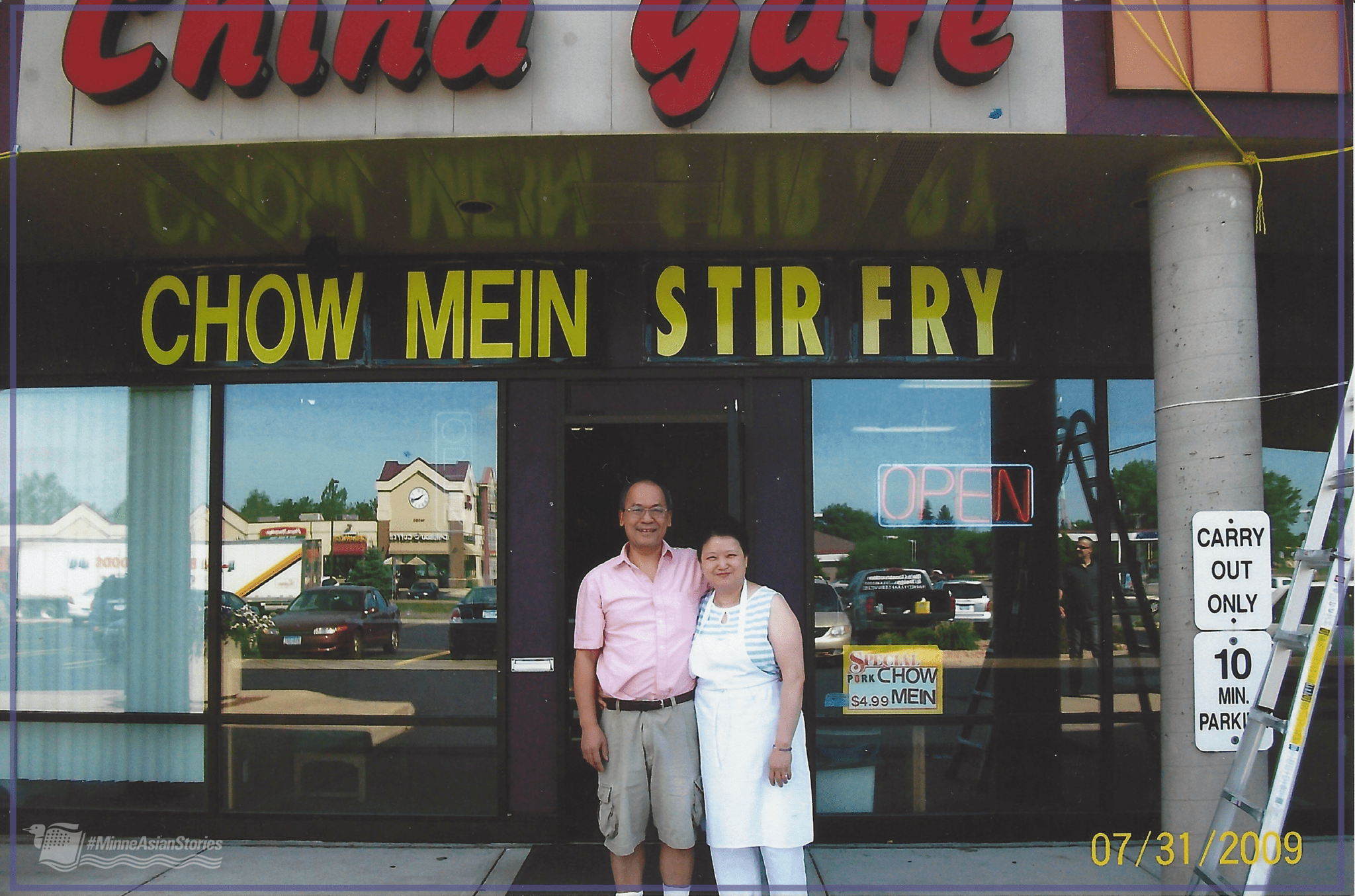
The aroma of jasmine rice hits my face as the hot oil of the fryer splashes on my hand when I toss a few egg rolls in for a customer order. The phone rings again as another customer walks through the door. I motion to them to wait a minute as I pick up the phone, “Hello, China Gate!”

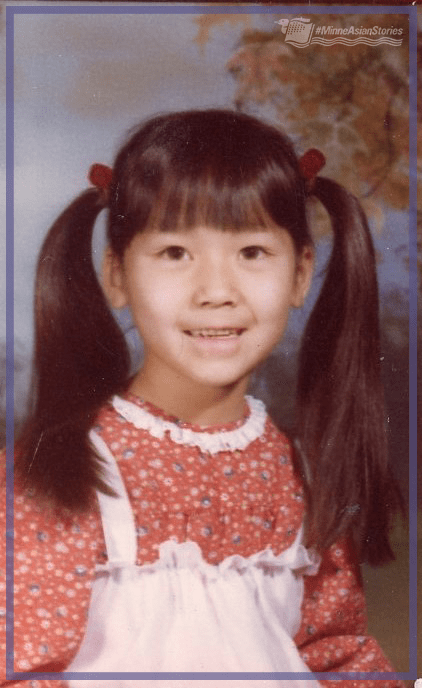
I was a sophomore at the U, it was Friday night and I was juggling the phone, fryer, packing orders, and working out a proof for calculus. I was used to working seven days a week, managing business finances, caring for my younger brother, taking care of my parents, going to college and attempting to have a social life. This had been my life since I could remember. When I was in grade school, my parents had a fast food restaurant in a mall. I would fill soda for customers, standing on a stool, so I could see over the counter.

My parents immigrated to the United States in 1980, opened Jade Garden (what is now Mandarin Kitchen), Chow Mein King and finally, China Gate. Through those decades, they found roots in Minnesota, had two sons and put them through college, traveled the world, made lasting friendships, and bore the ups and downs of marriage.

For the longest time, I absolutely hated working at the restaurant. It was a major annoyance, hindrance, barrier, stupid obligation; but I had no choice, it was the family duty. Not until I got older and started working in corporate America did I begin to truly appreciate that experience and the incredible sacrifices my Mom and Dad endured for over thirty years.

I secretly despised my parents for making me work long hours, every weekend, holidays; without regard for what I wanted. Yes, what I wanted, being a selfish brat growing up in the suburb of Lino Lakes. Fast forward to today, I built a family, a career, friendships, a life. This life I have is built upon the foundation of two immigrants with high school educations and a dream to ensure the next generation has every opportunity to make it, to do better than the prior.

Every day I reach into the tool kit that my parents built for me. It has a dent or two on the outside, plenty of scratches, but it is full of knowledge, love and life lessons. I use it in my day job, being detail-oriented, working hard to ensure deadlines are met, and working well in teams, because it takes a village. You are thinking, “but those are things you learn in life.” Yes, yes they are. My Chinese restaurant education made me who I am today, it is part of my Chinese American story, of how I show up in my career, in life – and I am proud to call it my story.

Check out the rest of #MinneAsianStories.
The American’s Dream


By Wanny Huynh, Saint Paul

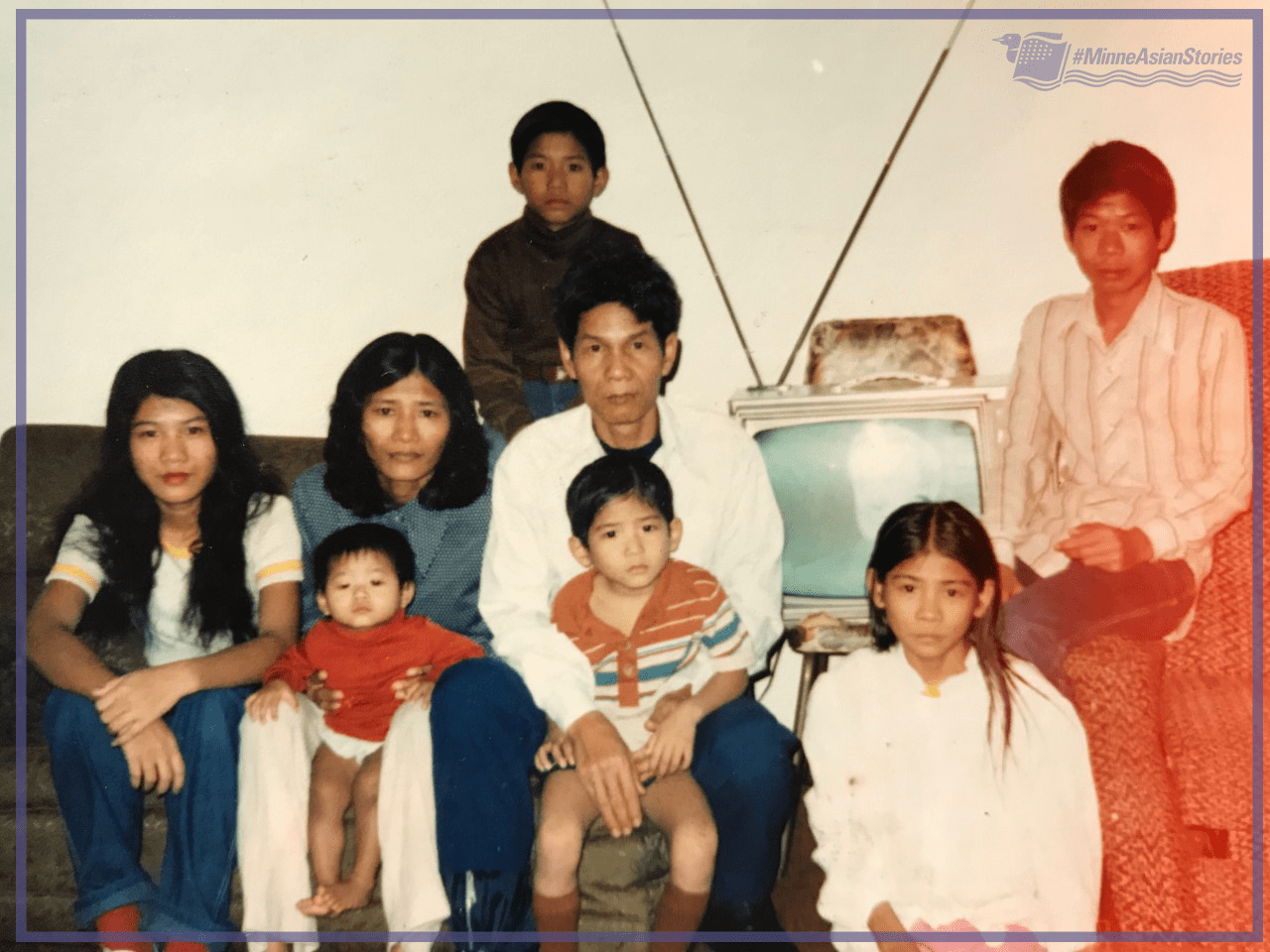
When I was ten year old, my family and I were stationed in a refugee camp in Thailand. One day our family received a letter from one of my dad’s friends whose family had just arrived to America. In the letter they included a family photo. After looking at the photo, it gave me hope. Hope that one day my family and I would go to America and live the American dream. The photo was nothing fancy. All it was was a picture of the family sitting on the couch and a TV in the center. Coming from a third world country I had not seen a couch or owned a TV. The only thing we had to sit on was a three-legged wooden stool. To see the family sitting on the couch and a TV made me wanted to go to America and live out that dream. That picture was an inspiration to me at ten years old. While living in the refugee camp I would go to the bus station every day to watch as a few lucky families boarded the luxury coach bus to freedom. I would stay long after the bus had pulled away and family and friends had waved their goodbye. I begin to visualize our family boarding the bus to freedom. Day after day I went to the bus station and visualized it. The picture in my little mind was so vivid, I can feel my little feet stepping foot on to the luxury bus. I can smell the fresh pine from the interior of the bus, I can feel my hand touching the cloth seating of the bus. It did not happen overnight, but after a few months of visualizing, one day my dad rushed home and shared the good news with the family. “We are going to America.”

Check out the rest of #MinneAsianStories.
Taking My Place Centerstage


By Tommearun Sar, Brooklyn Center

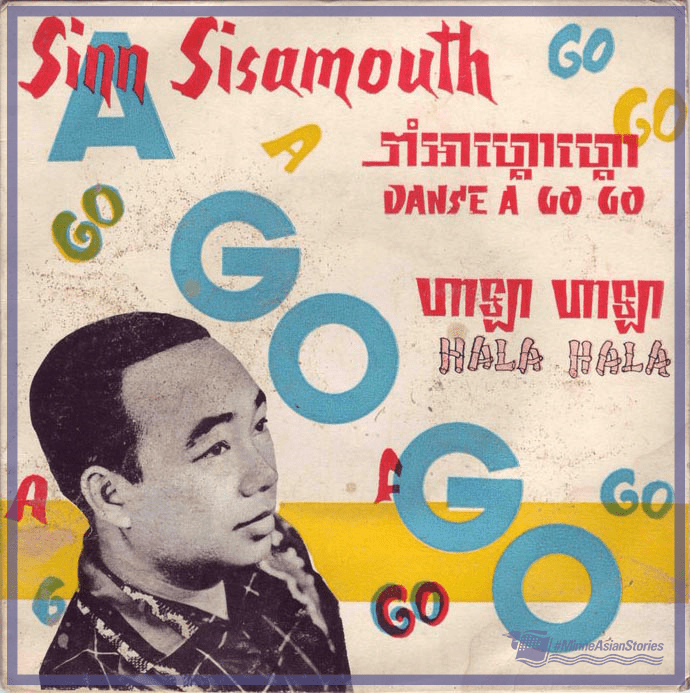
My dad loved to listen to Khmer music. He’d play it nonstop on the record or cassette player. When he’s drawing up blueprints, doing woodworking, fixing up the house, or just eating dinner, he’d play some Khmer oldies from the 60s. I never understood much of the songs but nonetheless, they became the soundtrack of my life. Some of my fondest simple childhood memories of going on a leisurely Sunday drive around Lake Bde Maka Ska and illegally picking crabapples to eat were accompanied by the emotional crooning of Sinn Sissamouth and the tearful warblings of Ros Sereysothea and Pan Ron.

As I grew older and lived with my aunt, I no longer heard those classics. Over time, I never really developed a strong connection to the Khmer culture. In some instances, I outright rejected them for being strange and un-American. I was, and still am, Khmer illiterate and can’t speak enough Khmer to hold a decent conversation. I actually laugh at the irony of the fact that when I was a kid, I encountered another Khmer kid who only spoke English and I said to him and his parents in Khmer, “How can a Khmer kid can’t speak Khmer?” And yet now….

A few years ago, I discovered a music video of a band lead by a Khmer singer. To my surprise, it was actually pretty good! It was not cheesy or amateurish like so many other Khmer karaoke videos. The band was called Dengue Fever and the singer was Chhom Nimol. I discovered they have done covers of old Khmer rock and roll songs from the 60s, the same ones my dad used to listened to. Hearing these songs again brought a wave of nostalgia for my childhood and a longing to understand what these lyrics mean, and to really embrace my Khmer heritage.

By sheer luck, Dengue Fever was going to perform at the Ordway and I volunteered to be part of Ordway’s community engagement event relating to the band’s visit. The event was a film screening of the documentary, “Don’t Think I’ve Forgotten” which covers the golden age of 60s Khmer rock and roll and the near destruction of Khmer music and art after Pol Pot’s regime. I participated in that discussion panel with the band members and spoke about my desire to connect to my cultural heritage through the music my dad played when I was little. It was such a healing experience to be able to openly talk about Khmer culture and my effort to identify as Khmer. And I get to share the stage with Dengue Fever? Wow.

Since then, I have been listening to old Khmer music on YouTube, even the cheesy ones with no shame. I am happy to put my heritage in its rightful place center stage.

Check out the rest of #MinneAsianStories.
Praying Away the Gay


By Tito Cantuncan, Minneapolis

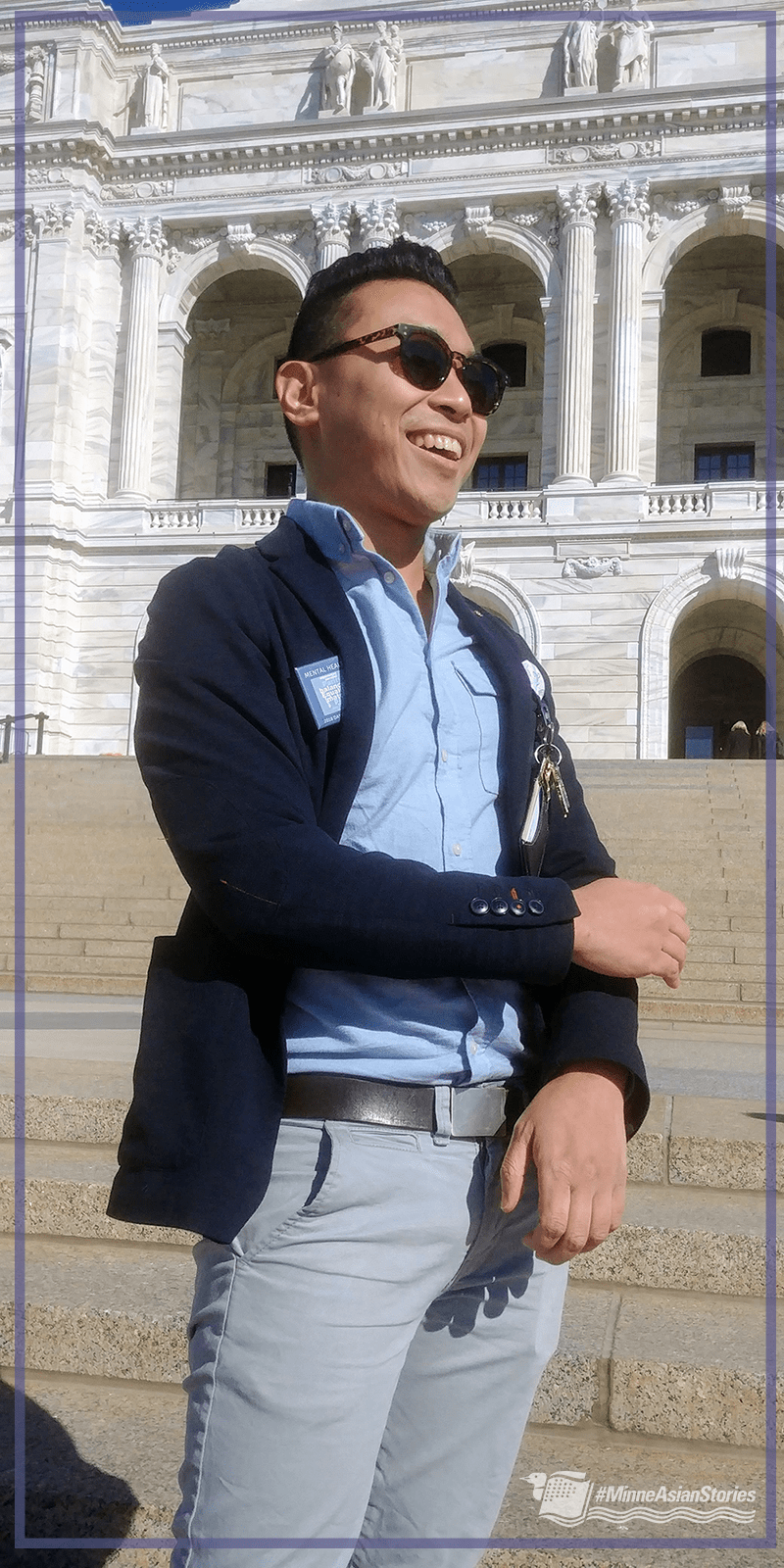
Standing on the steps of the Capitol on this year’s Mental Health Day on the Hill, this queer Filipino American social worker could not have felt more proud getting to advocate for mental health after a long struggle with trauma and mental illness.

Growing up in a mostly white suburb of Chicago was difficult, especially when attending school. Being quickly targeted for being different, first for being Asian and later for being perceived as gay, life for this young brown boy was not a dream. Thoughts of giving up on life, endless anxiety about potential verbal or physical harassment from classmates, and “praying away the gay” never failed to overflow my mind. Eventually, thanks to my supportive parents, I was able to seek out help, which led me to finding out I was dealing with depression and generalized anxiety. Through undergoing therapy, I developed a purpose in wanting to help others through the mental health field as my therapist helped me.

While pursuing that purpose through studying psychology and sociology in college, I found community in other Asian Americans, LGBTQ folks, and people of color. Never before had I experienced such validation and an embracing of my identities. Thus it was a stage of life where I felt like I was no longer a victim and instead an empowered agent of change. I later decided to be vulnerable and take a risk, deciding to move to a new city on my own and start a new chapter as a Masters of Social Work student.

Through this experience and engaging with the community, I learned abundantly about trauma. Not only about what it is and how to treat it, but also how to see it manifest in my communities and especially myself. Thanks to the resilience I’ve fostered from my own traumatic experiences in my youth, I aim to give back to my communities by educating about mental health and trauma and helping folks on their path to recovery and advocate for their needs.

Even though various voices (either in our heads telling us we are not worthy or those in higher places who say our issues are irrelevant) may try to tell our communities that we do not matter, know that your voice, your trauma, your struggle, your resilience, your growth, and your power are valid and can be used to make great change in yourself and others.

Check out the rest of #MinneAsianStories.
Smile


By Tie Oei, Eden Prairie

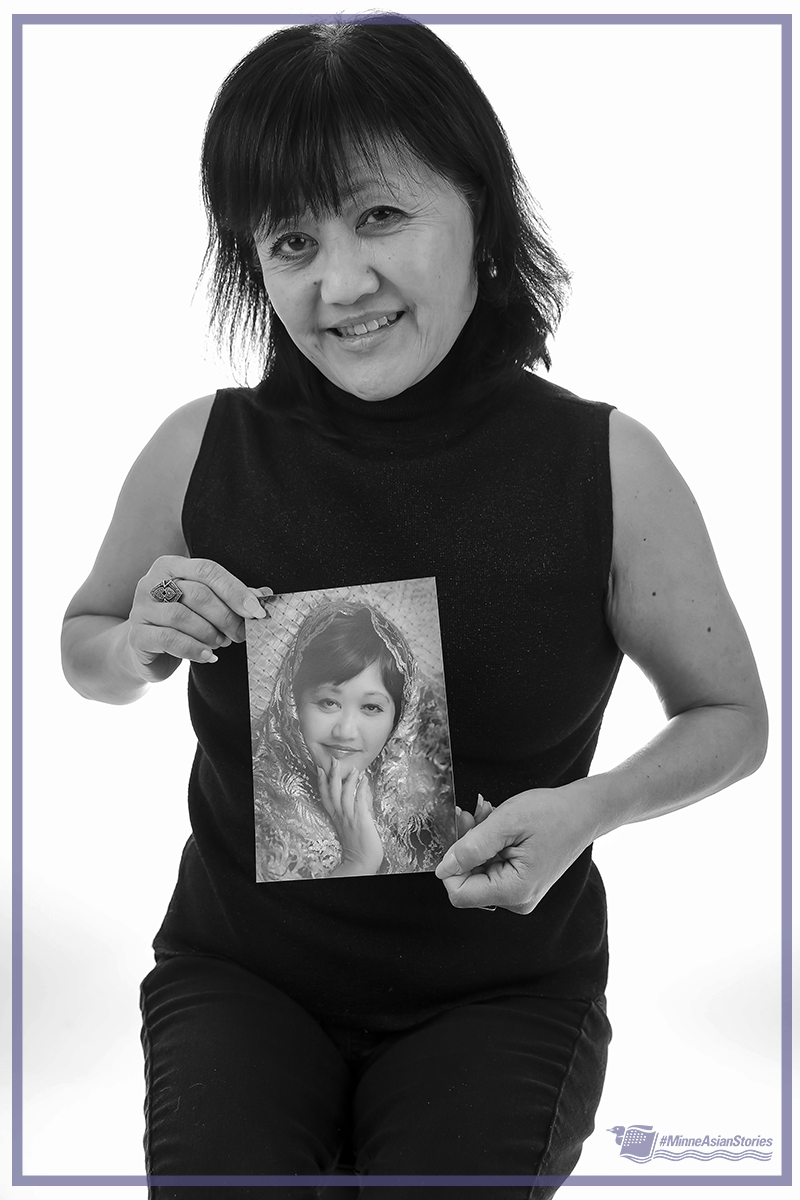
In a world where technology has mesmerized us and made its way into every aspect of our lives, Facebook has been a daily ritual for all of us. I have had people ask what is behind that smile regarding my profile picture. As Asians we smile and nod our yeses and our agreements OR our friend’s yeses and agreements. So what is behind that smile?

Behind that smile is knowing that our voice has been cut off and our opinions are no longer valid in this new land. For my parents, immigrants from Indonesia, they had no idea what a life change they were about to embark on. The journey has been humbling, honoring and humorous at the same time for them. I think the humor came when they realized how Americanized my brother and I were becoming.

For my brother and myself, it has been a journey of trying to fit in and yet not fitting in. Having grown up in America, we learned English as our main language and loved Pizza Hut and KFC. And to my mother’s horror, loving Chicken Fried Steak and demanding it at every meal. Not seeing a lot of Asian faces in our school put a dent into our self-esteem and self-worth.

The dual messages of “being too Asian” and “not being Asian enough” has been like an unwanted tail in my life. As one person said “She speaks perfect English”. Or as an ex-boyfriend said “I thought when I got you, I got a real Asian.” What is a girl to do but smile through it all.

So what is behind that smile? Covering up the pain and hurt when people are dismissive and degrading because they don’t understand where you have come from or the journey that you have taken just to be standing on your two feet.

Smiling because if you show contempt people wonder why you are being negative and not positive. People after all want to hang out with only positive people. Right?

Smiling because if it turns into a frown, the pain would spill out and non- stop tears would come like a waterfall cascading off the cliff. That scene is pretty but an “ugly cry” is not. Smiling not to face our feelings.

Smiling because your voice will not be heard and understood. What is there to do? Smiling thinking that this life will get better and hopefully you can leave it better for the next generation.

Smiling because you have overcome obstacles and challenges that only the strong would survive and thrive. Yes, that resilient smile is a survival technique. And only God can provide.

Smiling because you have found a church home, joined Asian organizations and finally found a home that you can genuinely smile and feel safe to be yourself. Smiling tears of joy and relief and your heart expanding.

What is behind anyone’s smile? Joy, pain, humbleness, happiness, disgust, humor? What is behind your smile?

Check out the rest of #MinneAsianStories.
I am Sonic Rain


By Sonic Rain

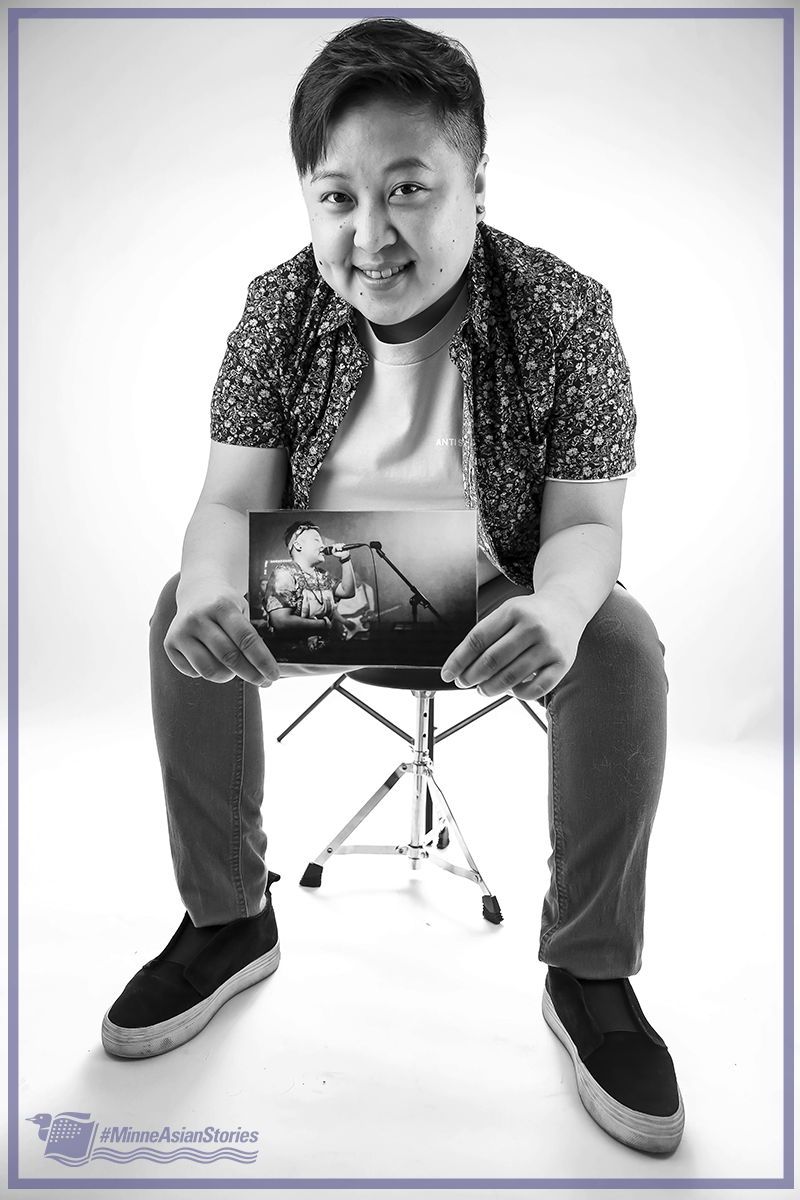
My name is Sonic Rain I am a Hmong Queer artist. Born in France, I grew up in Saint Paul Minnesota. This photo was taken at the Hat Trick Lounge in downtown Saint Paul at my first CD release concert. Uncertain and nervous, I thought no one would come, but we had over 100 attendees. I’m deeply grateful to everyone who came to support. This was a remarkable moment for me as a Hmong Queer artist striving and struggling to be accepted in the Hmong community.

Alarm rings and it’s 8am. Time to load the sound equipment, smoke machine, lights, microphones, guitar– everything we’ll need for sound check into my small Toyota Corolla. I get there and the sound guy is late. No worries don’t freak out stuff like this happens way too often. Breathe. I got this. It’s now been 4 hours of setting up, sound checking and making sure every last detailed is handled. I finally head home to prepare myself for the big night. 8:00pm and it’s time to head out to the Hat Trick Lounge. Nervous and uncertain I thought no one would come. But when I opened those doors the room was packed from front to back. Squeezing my way through the crowd trying to find my bandmates as people congratulate me. We find each other head upstairs for a huddle, calibrating our energies and good vibes. I glance over the balcony and I see everyone. My heart grows full, thankful and my confidence elevates washing away my anxiety. I head back downstairs found an empty corner in the snack machine area. I take a moment to collect my thoughts and I say to myself “you’ve been working tirelessly for the past 3 years. Reinventing yourself, picking up new musical skills and exploring music genres. Today is November 8th, 2014 and it’s your first CD release concert. I told you, you could do this.” Inhale, exhale. My phone vibrates. It’s 11pm. Curtain call and it’s show time. This is a celebration for the Queer community and marginalized people. My CD project is called Unique. It’s one of my songs on the album written by me to empower the Hmong Queer folks to be brave, to own your body, to be free in expressing yourself, be unapologetic to society and speak against homophobia. This is me performing on stage singing, rapping, and playing the guitar; sharing my passion with friends, family, and people who were curious enough to come. Everything I’ve been writing and making is finally being exposed. I am vulnerable but I’m not scared. I believe in the strength of telling real life experiences to people who may find it comforting or challenging. I was only an idea until Sonic Rain became real.

As Queer folks, we are often forgotten and disqualified for opportunities because of our sexual orientations. Being Hmong, our culture has strong traditional rules that teach men and women how to be a “relevant” and “respected” person. These rules do not serve me, they oppress me. We struggle to have healthy conversations about Queerness inside our community and how to be inclusive. Recognizing these struggles, it never stopped me from doing what I love and how I want to serve in the community. These battles added fuel and motivation for me to keep pushing the work forward, trust my process, create visibility and start having conversations about identities. Turning negatives to positives.
There is always work to tackle, but nonetheless, I have seen in recent years changes and the growth of Hmong social entrepreneurs, educators, and self-starting organizations. I had the pleasure of building relationships and connecting with leaders who are resilient and on the wave of creating visibility and support systems for marginalized and underrepresented people like myself. I love the Twin Cities and what it has to offer for Asian Americans. We’re definitely breaking grounds and the youth are rising. What I look forward to in the near future are the spaces Asian Americans will create, our missions we’ll serve, gaining allies and being active allies for our communities. Also, raising social awareness, being intentional and not doing work for the aesthetics of social status recognition.

Are you a princess in your country?


By Sayali Amarapurkar, Edina

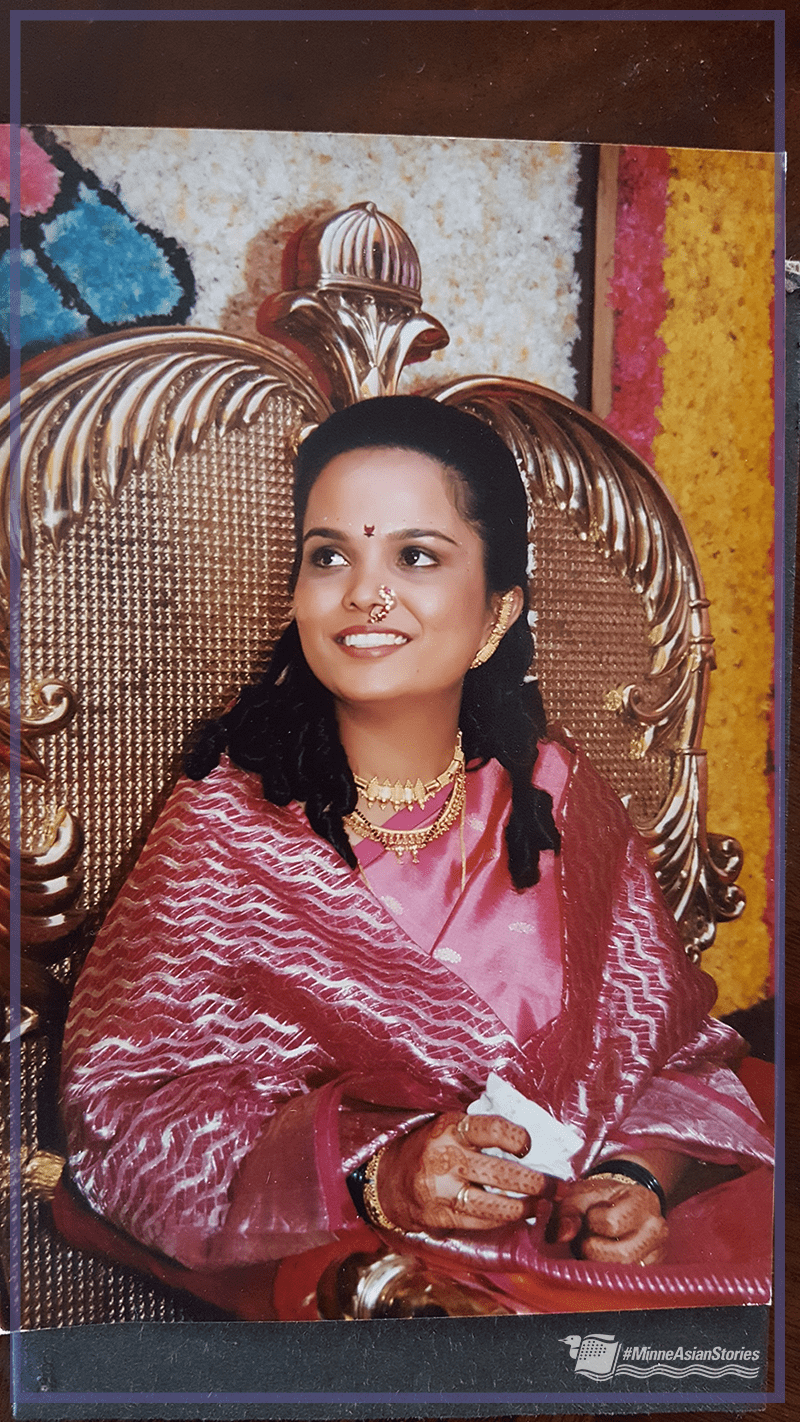
“Are you a princess in your country?” asked my 20-year old Caucasian graduate assistant as she looked at my picture on my office desk. Having just finished my PhD from University of Minnesota, I was hired to teach a course in my department. It was a picture of me from my wedding day back home in India, dressed in the finest pink silk sari and gold jewelry, perched on a golden throne with a wide bright smile! I got married and came to USA with my husband who was a doctor. Like any other arranged marriage, I got to know him through a mutual family friend. Although I was used to hearing many different questions about my origin, my people and my country, this was a new question for me.

“Why do you think so?” I asked.

“Look at you all in gold. Looks like you come from a rich royal family!” She was noting her observations so matter-of-factly that I was taken aback! I had never thought about that before.

My wedding picture is similar to a wedding picture of any South Asian Hindu bride. Girls are expected to get married in their early twenties and parents from all socioeconomic backgrounds want to see their daughter dressed in the finest traditional clothes and jewelry on her wedding day. Parents and relatives go out of their ways and means to give a lavish wedding to their daughters. Sometimes they even mortgage their house, take out loans, or sell their land to afford a lavish wedding. It is so much a part of the South Asian culture that we don’t think twice when we see such a bride. This American college student who grew up in the Midwest had never seen anything like this before and was asking her naive questions.

I said “I am not from a very rich household, but an upper-middle class family. I am the eldest grandchild and have a big joint family of grandparents, uncles, aunts and cousins who all were very excited about this first wedding in the family after a long time. So it was indeed a big affair and I did feel like a princess that day!!”

Check out the rest of #MinneAsianStories.
Born out of the Killing Fields and Left without a Nation


By Sambath Ouk, Fairbault

I came to this country at the age of 2. My family escaped the “Killing Fields” of Cambodia and journeyed to the Khao I Dang Refugee Camp in Thailand where I was born to a Cambodian mother and a Chinese father. Because I came to the United States so young, I had no memories of what the Thai camp was like. Furthermore, my mother and father got separated due to disagreements on how a refugee should live. I did not know my father was alive until I was five years old, did not speak to him until I was 17, and did not see him until I was 31.

For many reasons, growing up in Rochester, Minnesota brought me few answers and many questions. Since I was a young child, I have struggled to know who I am. The struggle has not been related to finding out what I like or don’t like or what I want to do in the future like other kids. The struggle is knowing if I belong anywhere. Where is my country? What nationality am I? Do I have a particular culture to relate to? Which history should I be proud of? Am I a child without a nation? Is that what a refugee is? I tried to ask and seek answers. However, no one was able to tell me definitively because they all told me something different.

For a long time, the identity that I wanted to hold on to most was to be Cambodian. However, the suffering and the sorrow my family experienced during the Killing Fields are things they will never believe I can understand. For the past 36 years, my family talked about the events of the ‘Killing Fields’ like they just happened yesterday. And as much as I and people of my generation wanted to tell them we understand, it almost seemed soothing to them to be able to tell us that we didn’t. Furthermore, our struggles in the United States with school, racism, and all other problems seemed small in their eyes and silent to their ears no matter how loud we tried to speak up. Their answer to our explanation was always “You don’t know what struggle is. Have you experienced starvation? No, you can eat even when you’re not hungry. Have you had to trade a life of someone you love to save a life of someone you love more?” No, those are not the kind of tough choices I have had to make. So am I Cambodian? For a long time I feared that I may not be good enough to be Cambodian. Who am I then? For a long time I had to ask myself this question.

The only definition I knew to characterize me properly was that I was a refugee. I was a child growing up without a nation. And this struggle to belong just somewhere played a big part in the lives of myself and the people around me.

Fortunately, I had my ESL teachers in my life. As they looked at my journey to discover my identity, they somehow understood that for many reasons, I was neither American nor Cambodian but a beautiful mixture of both. They helped me learn about Cambodia, its culture prior to the wars and the terrors of the war. They showed me how my Cambodian culture can be part of my everyday life in America. Therefore, they helped me reconnect with my past and helped me understand the transformation of my future. Most importantly, they helped me find peace within the two worlds I lived. It is for this fact that I chose to go into the field of ESL teaching. I want to help future refugee students understand how meaningful their stories are. They don’t just belong somewhere, but instead, they are a beautiful part of everywhere!

Check out the rest of #MinneAsianStories.
Ruby in Minnesota


By Rose Chu, Little Canada

Thursday, March 13, 2014. Early in the week, I had travelled to Alabama to help bring my mom, Ruby, and my stepdad back to Minnesota for a visit. I had arranged for some follow up appointments at the Mayo Clinic and with Dr. Zhouling Ren, our traditional Chinese medicine doctor. Ren has become “family.” She had previously collaborated with the amazing doctors at Mayo to care for Ruby while Ruby went through intensive chemotherapy and radiation for her second bout with cancer in 2004. Without a doubt, if not for Dr. Ren’s herbal prescription for Ruby, Ruby couldn’t have survived the toxicity of the chemotherapy and radiation.

We had completed three days of doctor appointments. Since the fall of 2009, these appointments were now less about her cancer and more about managing Ruby’s vascular dementia. Finally, my mom and my stepdad could take a break and rest before more appointments on Friday and the following week. I remember spending some time with Ruby in the morning before heading to work after being away for a few days. Whenever I was around, Ruby was eager for me to take her places. She might have lost a lot of her cognitive abilities, but she never lost her love for shopping!

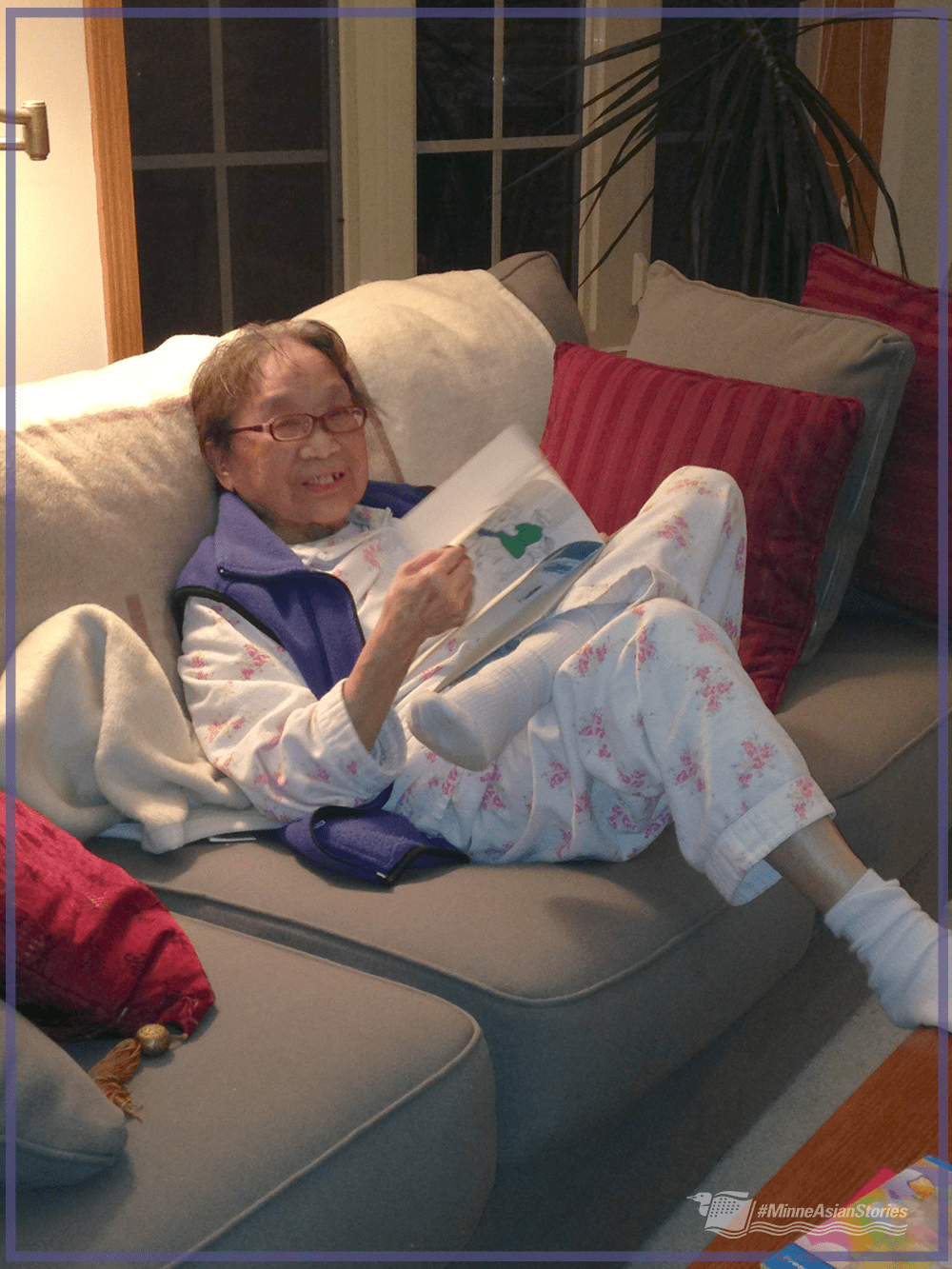
Although she could no longer handle money on her own, she never lost her sense of finding a great deal! It was no different this day when I got home from work. We went to the closest church-run thrift store, one that we have visited many times in her previous stays in Minnesota. While I was paying for a blouse she picked out, she was curiously looking through some books on a table close by. She picked out one and handed to me to buy. It was a thin book with pictures and large words titled “I Love to go to Church”. That evening after dinner and after I bathed her, on her own she moved to the living room couch in her pajamas, picked up the book and started reading! Well, “reading” in whatever capacity she had left, especially with her limited English proficiency. It was clear she was engaged with this book she proudly chose for 15 cents! She looked so comfortable, so content, so happy.

There were many such precious moments during her 12-day stay in Minnesota, albeit much shorter than expected this time around. Ruby didn’t want to leave. I told her I would come visit her in Alabama soon and bring her back again in May for perhaps a much longer stay.

Some unfortunate turn of events ensued. Ruby got moved to Virginia. I visited her in August and September. I saw her take her last breath on October 12. Rest in peace, my dear mother. I can feel your presence in the house that you loved. You are with me, always.

Check out the rest of #MinneAsianStories.
Halloween in Roseville


By Patti Kameya, Saint Paul

When I look in the mirror, I am Raggedy Ann! What do you see?

“Are you Chinese?”

A small boy peered up from under straight dark bangs. I replied, “No, are you?” “No.” Pause frame.

That summer, I moved into that mid-century rambler overlooking Roseville Central Park. At the block party people asked if I knew the other East Asian wife, who wasn’t there. My neighbor across the street lost her Lebanese husband several years prior. That was it for nonwhites. The child probably lived on a matching street. If he had shown up, I could have been his biological mom. Or his nanny.

“Great! We’re both not Chinese!” Perhaps I made him happy. Off he went, his bag slung heavier.

Who taught him to ask other Asians if they were Chinese? Not his non-Chinese parents. Someday he may learn how war and empire shook people loose from China and elsewhere. Those stories feed assumptions that he too will shake loose, back to somewhere else, just not here. Someday he may realize that for some his quick eyes and jet-silk hair are a costume he can never remove, as his peers proceed in attire they choose: craftsmen, pathfinders, caretakers, gatekeepers.

But the land and the people before us unlock the true story of our community. What populated Lake Bennett before dandelions and buckthorn took over? Do the Dakota frighten each other with Abraham Lincoln costumes? If Dred Scott had not been denied his humanity, would our neighborhood bloom with more color today? For better and for worse, Asian Americans appear incidentally, like Halloween snow. Our costume did not scream enemy during World War II; afterwards it did not sing hero either. As a result, few Minnesotans remember that the Imperial Navy could not hide after the Nisei Military Intelligence at Fort Snelling cracked their code.

The child probably forgot me as he tumbled into sugary sleep. But he may recall and cherish our brief exchange, a moment suspended in mutual non-Chinese identity as the world still turned. After that only white kids stopped by, but they didn’t care to be not-Chinese with me. At eight, I darkened the front and joined the boxelder bugs in the study.