Powering Up for 2020: PRESS RELEASE

November 16, 2019, St. Paul, MN – The Coalition of Asian American Leaders (CAAL) will host the first Asian Minnesotan Leadership Summit: Powering Up for 2020 on Saturday, December 7, 2019, at Metropolitan State University to lift up and bolster community leadership, organizing, and mobilization efforts in Minnesota’s Asian American communities. Given major political elections and activities, such as the U.S. Census, CAAL feels it needs to help ensure every community is aware, empowered, and supported to exercise their civic duties.

“There is a lot happening in our cities, state, and country at this time. More than ever, our leadership – how we exercise our power and influence, grow our connections, knowledge, and skills, and support our communities to participate in civic processes – will be critical to our democracy,” explains Bo Thao-Urabe, CAAL Executive and Network Director.

At the day-long Summit, 250 Asian Minnesotan leaders from across the state will have opportunities to connect with one another, learn new skills for mobilizing and organizing people, gain new knowledge about key issues impacting the community, and identify where Asian Minnesotans can increase civic engagement in order to shape democracy at historic levels in 2020. Some planned workshop topics include: the importance of census participation, understanding election cycles and structures that enable communities to fully participate in elections, how to effectively advocate for issues at different levels of government, and being your most powerful self as a leader.

Nationally-renowned author and activist Helen Zia will deliver a keynote address about what civic engagement in 2020 must mean for Asian Americans as one of the fastest-growing racial groups. Other confirmed speakers so far include State Representative Samantha Vang and former State Senator Satveer Chaudhary; other speakers will be announced soon.
To learn more about the Leadership Summit, visit: http://caalmn.org/poweringupfor2020/
###
About Coalition of Asian American Leaders – The Coalition of Asian American Leaders (CAAL) is a multi-ethnic, multi-sector, and multigenerational network of more than 2,000 Asian Minnesotan leaders harnessing collective power to improve the lives of community by connecting, learning, and acting together.
To learn more about CAAL, please visit www.caalmn.org.
Powering Up for 2020 Press release
Spark Leadership Fund: PRESS RELEASE

Spark Leadership Fund Recipients Announced

15 Asian American Leaders within Minnesota receive funding for their Leadership

Contact:
Bo Thao-Urabe – bo@caalmn.org | (612) 208-7226 (or)
Brian Kao – brian@caalmn.org | (612) 524-9694

The Coalition of Asian American Leaders (CAAL) will announce 15 Asian Minnesota leaders as the recipients of the Spark Leadership Fund and will present selected leaders with awards of $1,000 each. The Spark Leadership fund aims to support each leader’s project-related expenses and activities that would strengthen and grow an individual’s skills/experiences to achieve a leadership goal.
Montha Chum, one of the selected leaders, stated that she would use the funds support the development the newly-founded organization ReleaseMN8 to fight against unjust family separations and deportation in Minnesota and across the country. Asma Mohammed will use the funds to help pay for travel costs to attend culturally-relevant training regarding sexual assault and healing.
Mohammed stated, “My goal is to use these funds to invest in my own understanding of trauma around sexual violence and learn how to support survivors in my community better while taking care of myself. I know that connecting with others who are doing this work is crucial to me feeling less alone.”
Other supported projects and activities include creating a 26-episode podcast series to help elevate Asian Minnesotan stories, publishing a memoir manuscript written for 1.5 and 2nd generation refugees, and paying for training and educational programs. A full list of award recipients and a brief description of each leader’s activity or project is attached.
The announcement will coincide with CAAL’s Asian Pacific American Heritage Month kickoff event at the Minnesota State Capitol. The event will be held at the State Capitol Rotunda on May 6, 2019 from 10 a.m. – 12 p.m. Mayor Frey, Governor Walz, House Speaker Hortman, Representative Samantha Vang and members of Minnesota Asian Pacific (MAP) Caucus, and other legislators will join the celebration. This event is open to the public. Community members are invited to attend and can RSVP here.
WHEN: Monday, May 6, 2019 from 10:30 am to 12:00 pm

WHERE: Minnesota State Capitol Rotunda

###

About Coalition of Asian American Leaders

The Coalition of Asian American Leaders (CAAL) is a nonprofit network of more than 2,400 Asian Minnesotan leaders who are harnessing our collective power to improve the lives of community by connecting, learning, and acting together. To learn more please visit www.caalmn.org.

About SPARK Leadership Fund

The SPARK Leadership Fund offers financial support to Asian Minnesotan Leaders within the Coalition of Asian American Leader’s network. Individual leaders can apply for funds of $500, $750 or $1,000 to support their own growth or to fund a project idea. To learn more please visit www.caalmn.org/spark/.

I’m Still Healing


By Shiney Her, Saint Paul

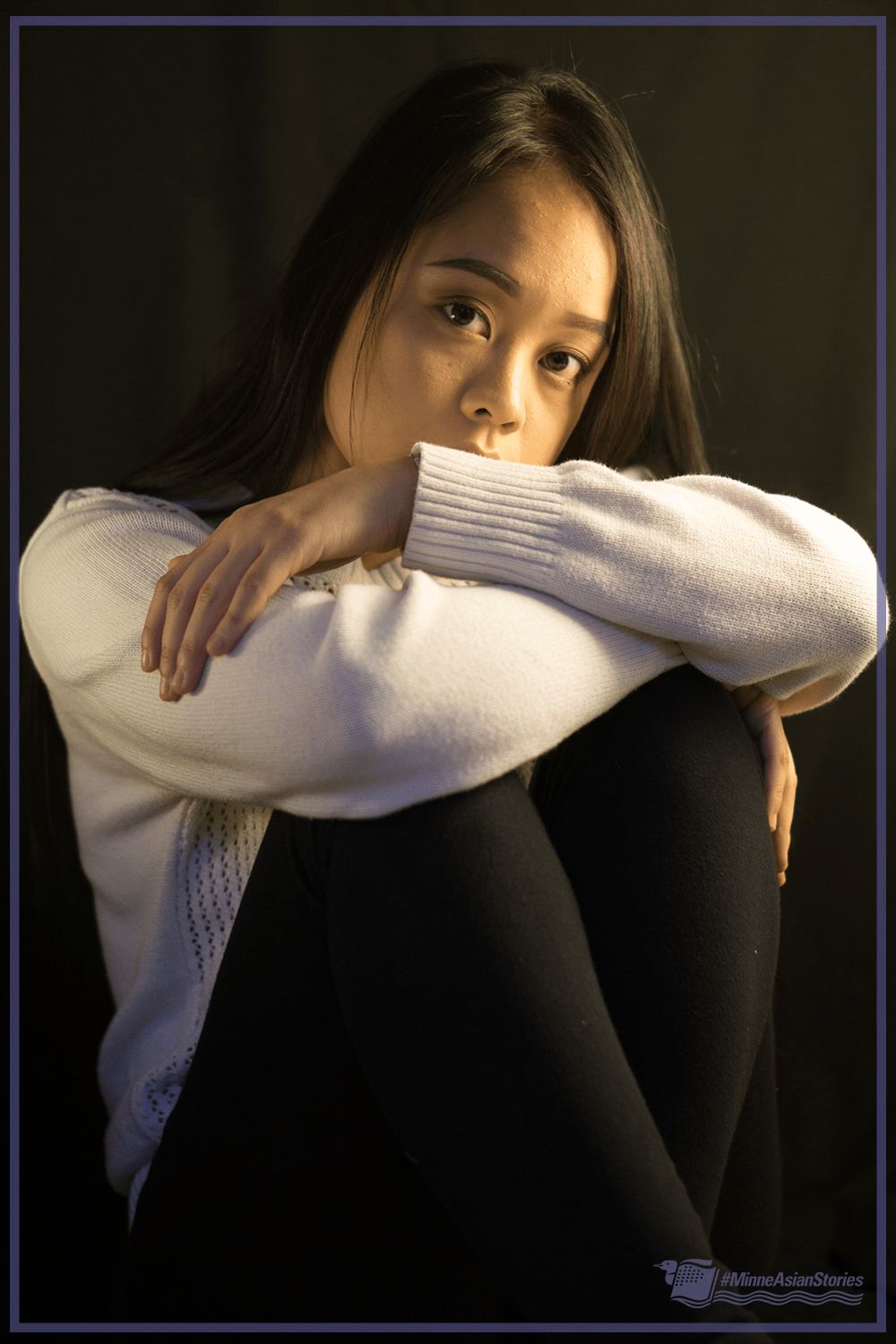
I lived and grew up in a small, rural town in Southwest Minnesota called, Walnut Grove. At 16 years old, I learned to play volleyball and enjoyed it, so I was in a volleyball team. It had been over a year, but all I ever did was play volleyball. I never really learned or had the courage to talk and build relationships with the other girls. They’ve been playing volleyball together and known each other since grade school so I didn’t feel like I belonged. I was more comfortable hanging out with my Hmong friends, although they weren’t apart of the volleyball team with me at that time.

One night, we were supposed to have volleyball practice. I was early, so I figured I would wait by the gym. I remembered how everything felt, like it was just yesterday. The gym was pitched black. The hallway was quiet. The school was empty. While I was strolling around the school looking for someone, I found the janitor on duty that night in his office, and then he told me practice had been cancelled. I was frustrated, thinking to myself why didn’t anyone tell me sooner? I remembered earlier that week I had briefly saw some of my teammates. Why didn’t they say anything about practice tonight? My sister had already left after dropping me off, so I had to find a way to get home. No one picked up my calls. I had no choice but to feel upset. I didn’t have any way to contact my teammates and coach (not that it mattered, but the thought of it made me realize how truly left out I felt). After frantically and desperately looking for a way out of feeling like the world was ending, the janitor kindly offered to take me home. As the janitor quietly drove me home, the usual 20-minute commute from school to home felt like forever. During the ride, I secretly cried, hoping that I didn’t feel or look any more pathetic, especially in the company of a complete stranger. I did not want to cry, but then trying hard not to cry made me cry even more. I’ve never felt so alone in my life. Questions flooded my head, and I wanted answers. Why do I have to feel this way? Why is this happening to me? I know everything happened unintentionally; but for some reason, it sucked because I was still hurt even though no one intended to hurt me. At that time, I didn’t have the courage to settle the uneasy feeling inside me, so I ended up internalizing it, like nothing happened. I was a coward. I wanted to forget everything so badly. I felt stupid and blamed myself for letting something this small hurt me so much. Now, I am haunted of being alone, having no connection with anyone, and feeling helpless even with the dependence of others. I hope a day will come when I have healed and forgiven myself completely, loving myself to the fullest.

Check out the rest of #MinneAsianStories.

Minnesota Nice


By Pang Yang

Here’s my family’s story:

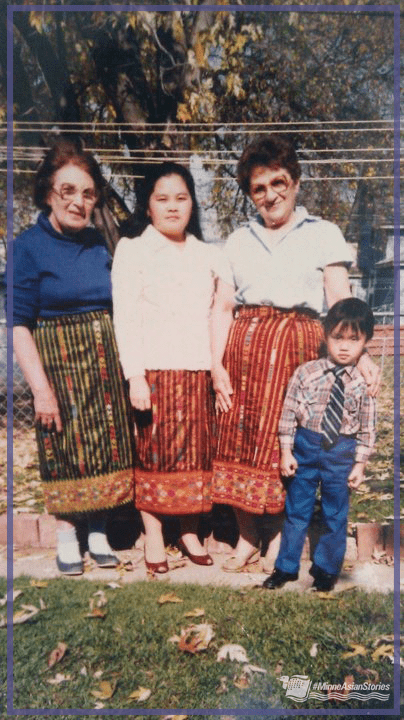
Albermarle Street in the 1980s was filled with so much love because of Minnesota Nice. As a refugee family fleeing Laos, living at our Section 8 housing at St. Paul’s North End neighborhood for over a decade, my family was truly loved by our white neighbors. One summer, when asked, they were thrilled to take photos in my mom’s Laotian skirts.

Every Thanksgiving our table was filled with so much love including a hot delicious turkey and American sides dishes made especially for us from our fabulous neighbor. A month later. Christmas stockings were filled with coloring books, crayons, Care Bears and toys; it was more than my parents were ever able to provide for us.

Two doors down, Grandma Lorraine and Grandpa greeted us with a smile every single day after school with a cookie and sometimes even special desserts. The grandparents of Lorraine Michelson, our childhood best friend, loved us just like their own and we even called them “Grandma and Grandpa”. My siblings and I felt so special.

Those are only memories that filled our hearts for the last 20+ years. In 2010, with the help of Facebook, we were reunited with our childhood friends. Sadly, we learned that Grandma Lorraine had Alzheimer’s for the last 10 years and would not remember us. She was our one and only Grandma. In 2013, Grandma Lorraine passed away. For the memories and love our neighbors have given us, we are who we are because of you. Your love taught us to love others less fortunate than us.

Check out the rest of #MinneAsianStories.

Multiethnic and Multihomes


By Su-Fei Wong McKhann

I spent a fair amount of my young adult life fighting (perhaps even resenting) that people instantly made assumptions about me – both good and bad – based on my external appearance. As a graduate student and a young professional, I was determined to be known for my abilities and wanted to downplay my Asianness that I perceived was a liability. Some stereotypes can be harmful and demeaning, but trying to ignore ANY of it meant I was missing out on embracing ALL of me. (I’m Chinese by ethnicity, Singaporean by birth and upbringing, and have lived in three countries and three states in the past 30 years.)

Only recently (the joys of introspective middle age!) have I come to realize that leaning into all that I am helps me be the best version of me. I celebrate and cherish my Chinese heritage and upbringing. I believe that it gives me a valuable and unique lens and perspective because of how and where I’ve grown up and lived. For example, I value putting community first, speaking out for others whose voices are not heard, and respect for all (even when it’s hard).

In the 10+ years we’ve called Minnesota home, I’ve found a supportive network and community of friends who have completely different ethnic and cultural backgrounds. We all bring our authentic selves exemplified in how we show up for each other, express genuine curiosity about our differences both cultural and intellectual, and we learn from and grow with each other. My Minnesota community has shown me that by embracing and acknowledging our differences, we can be open and honest about what can bring us together. My husband and I are grateful that we landed here and get to bring up our children in this community. Even as “transplants”, our family has felt loved and supported. My hope for my children is that they will proudly self-identify with all the parts that make them greater than the sum of the whole – part-Chinese, part-Caucasian, wholly Minnesotan.

Check out the rest of #MinneAsianStories.

A Mini American in Missoula


By Bryan Thao Worra, Minneapolis

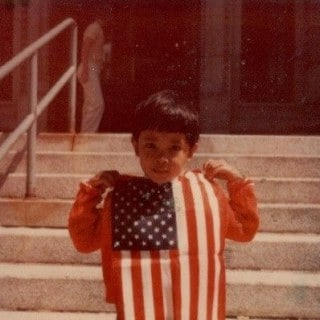
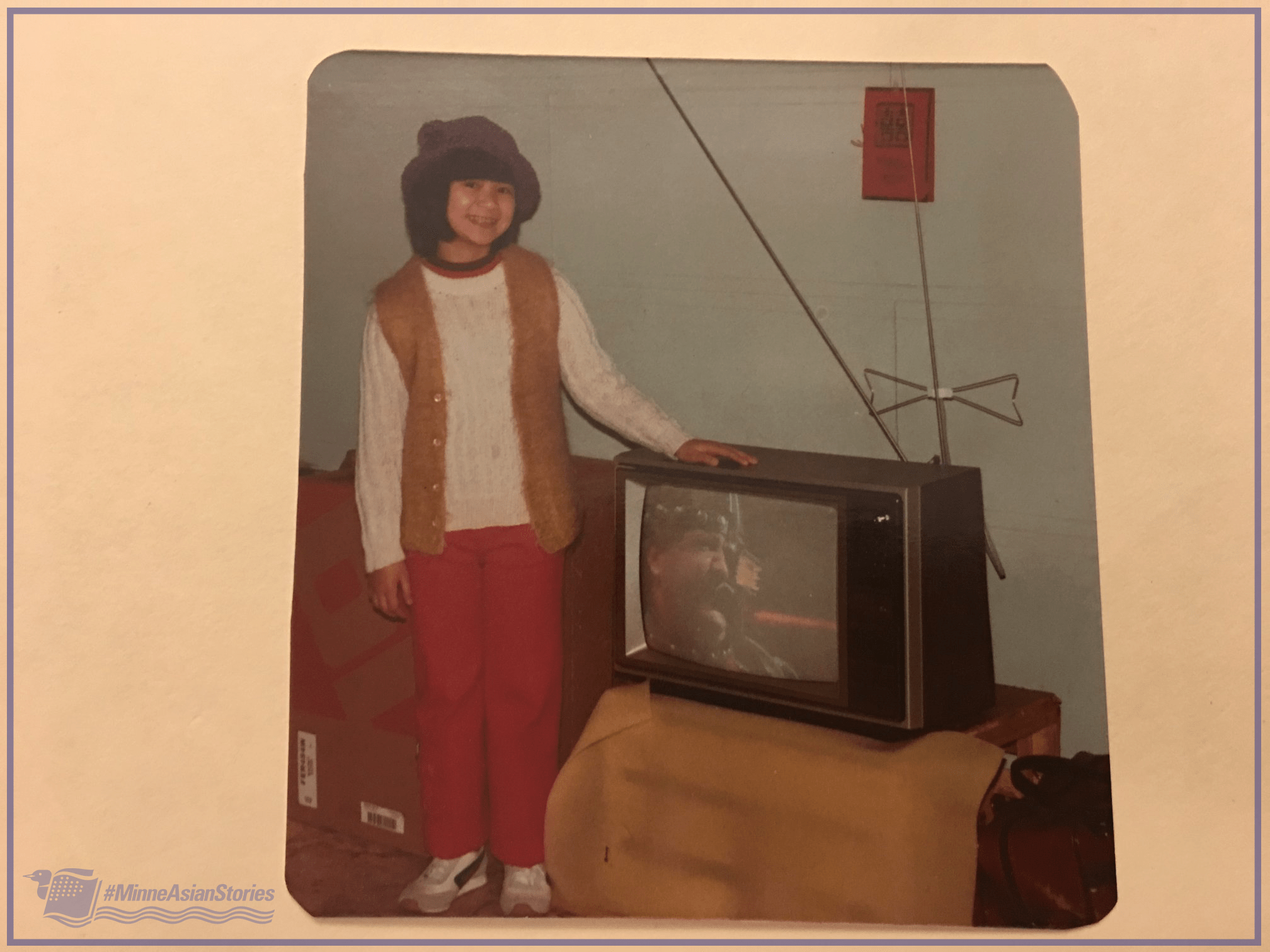
One of the most well-known pictures of me is the one of me holding the American flag as a child in 1976, and I often get asked what the story is behind that. This is the very first picture of me as an American.

It may be helpful to appreciate that many of our families who came to the United States as refugees from Laos didn’t have the chance to take pictures with them of who they were or their lives before the end of the wars in Southeast Asia. I was among the first Lao to come to the US, arriving earlier than most in 1973 as the adopted son of an American pilot and his family who’d been flying for Royal Air Lao at the time. 1973 was the year most Lao remember as the end of the controversial secret US bombing and the year most Americans left the country.

1976 was the American Bicentennial. As our country marked its 200th anniversary, my family was living in Missoula, Montana and I was finally eligible to become a citizen. I was three years old at the time, and my naturalization ceremony was June 14th, Flag Day, so they gave everyone an American flag for the occasion. Standing on the courthouse steps after this picture, everyone asked me what I wanted to do next. I wanted to get a hot dog and some apple pie with mom and dad. Which wasn’t as grandiose as “Live the American Dream,” but was pretty good and easy enough to make it happen for the time.

I’d like to think in the 40 years since, I lived up to the ideals of being a good citizen while remembering my roots, and the importance of helping others on similar paths who didn’t have it quite so easy. 20 years ago, I came to Minnesota in 1998 searching for my long-lost family. I found a place to call home and rebuild our community. There’s still challenges for many of us as we approach four decades in Minnesota as we try to remember our journey and to envision a shared future we see ourselves in, but I’m optimistic.

Last year, I was passing through Montana following the 4th National Lao American Writers Summit in Seattle, so I decided to take a stop once more by those old courthouse steps. As you can see, a few things changed in the meantime. If there’s anything our community’s journey teaches me, it’s that together we can build so much. I often think back to the words of the late Senator Paul Wellstone, “We all do better when we all do better.” They were true then, and they’re true today.

Life Before and After Anousone Phanthavong


By Chanida Phaengdara Potter
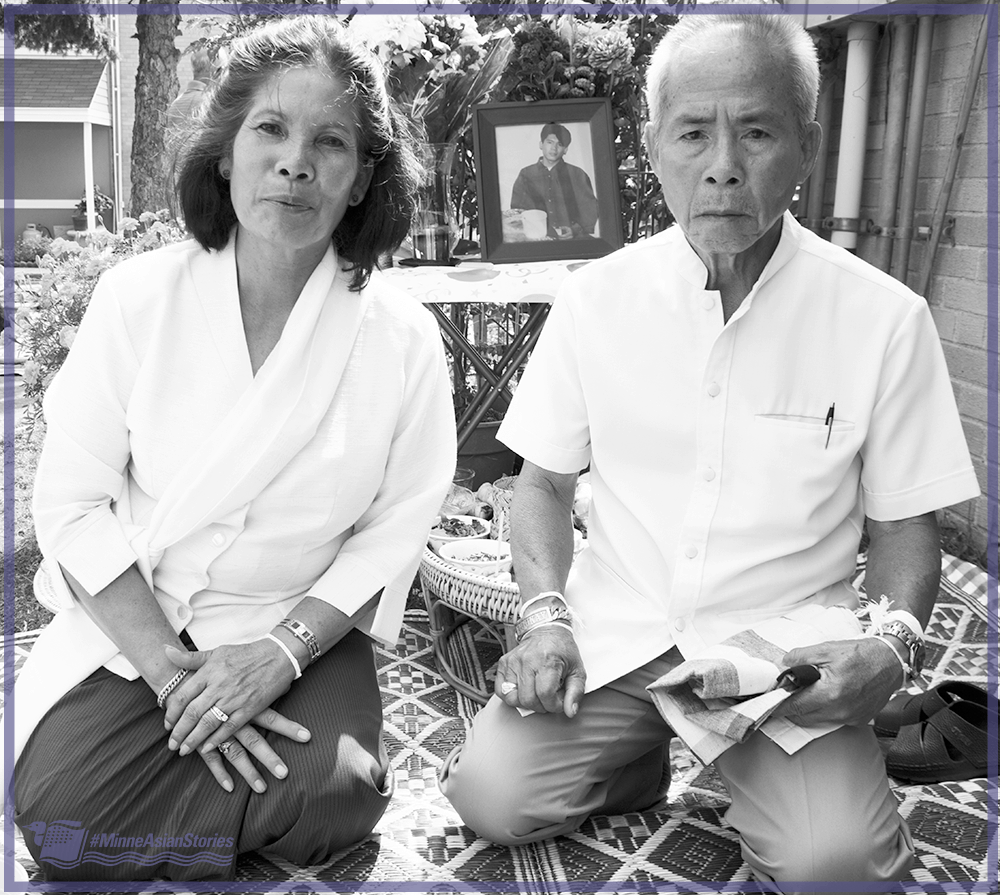
for Mrs. and Mr. Phanthavong, Minneapolis

It was hard at first. There was barely enough to eat. We don’t speak English well, and now that our children are all grown up, they went to school and help us when they can, so it’s a bit easier. We’re in Harrison Neighborhood now, where all the elders and their kids who are still here take care of each other.

My husband and I don’t make more than $1,000 a month. We depended on Anousone to take care of us, because he didn’t have a family yet, like the rest of the children. But now that he’s been gone for more than three years, we’ve been trying to take care of ourselves on our own.

On the day Anousone died, my husband and I were moving. We wanted to move closer to where all the Lao elders lived in huan luang (housing projects in Harrison neighborhood). Our things were all in boxes. I remember getting off the phone with Anousone because he was coming to help us the next day, but he said he needed to stop by the restaurant he worked at. The night came. Then a police officer knocked on our door to tell us what happened. Next thing I did was a blur. I kept running up and down the stairs, till I ran out of breath. I didn’t know what to think, what to do.

We heard that people were gossiping and even her (Amy Senser) lawyer tried to use Anousone’s past to keep her free. That’s not fair to do to someone who is already dead. You know what had hurt me the most as a mother? Not that she hit my son, but that she had left my son there. The act of leaving my son to die was what made me cry every day during that time.
After the trial was over, we went back to Laos to visit. In Laos, we wanted to see how it was to live comfortably, but then we couldn’t seem to be happy. We would miss our children in the states. That’s how you are as a mother. Your children are your first thoughts.

Since the trial, Amy’s best friend used to stop by with food and to see how we’re doing. At first, my children wouldn’t allow it; because they were furious. But I had to remind them, “It’s okay if they want to help. It won’t hurt us”.
We lost a son who we depended on a lot. Some of our children lost their jobs, because they had to help support us, interpret for us and help us get to the courthouse. Since the day of the funeral, one of my grandsons couldn’t stop having nightmares about his Uncle Anousone. The dreams took over his life. He would say he kept hearing voices. He had to be hospitalized. He’s still hospitalized to this day.

America is our home. We miss Laos on most days, but this is home for us. When we stay in Laos, we think about our children. When we come here, we think about Laos and how much more simple life could be. But we left everything back then. We have no home, no life in Laos to go back to. This is our life now as an elderly couple in Minneapolis.

Check out the rest of #MinneAsianStories.

Put Your Hands Up


By Jon Vang, Saint Paul

Growing up, my family moved around a lot. After the refugee camps, my parents landed in Michigan. We moved to MN to be with other family members. I wasn’t able to build childhood friends because I moved so often. When I was a teenager, I was riding around town on my stolen bikes and learning how to ride a city bus. A lot of my friends were in the public housing projects in St. Paul. Seeing them there, we were all pretty poor, but we didn’t realize it and didn’t see too much stuff. Our parents worked multiple jobs and we didn’t see them too much.Soon we got bored with staying at home.

So we hung out at the parks and the police would harass us and take pictures of us. They’d say, “Put your hands up. Stand together.” Some were kind, and some weren’t so kind and then we would get searched. As time went by, I grew into a system where interactions with police were normal. At 15, I got into trouble with shoplifting and hopping into stolen cars with my friends. Then it progressed to drugs, alcohol, and fights with gang members.

By age 23, I got called to a fight that escalated into the death of a young man. I was incarcerated in the state prison for 8 years for second-degree murder. It felt surreal, but I had made my mistake. Being in the prison community was where I found that this fight and the hatred between people on the streets were different when we were incarcerated together. We were supportive of each other inside the prison. If we had one packet of noodles, we would share it with each other. It reminded me of some of the stories my parents told me about refugee camps. They had to support each other to survive because they didn’t have much. I finally felt it. I saw Lao, Vietnamese, Cambodian and Hmong folks in prison and we grew together. While I still had friends who went to bars, clubs and got married; I was in prison working for 25₵ per hour.

“What did you do to get in here?”

I remember seeing an old Hmong man in prison. He didn’t understand the English language and he didn’t understand his paperwork and wanted my help to translate it for him. I tried my best to help him, but when he got to the courtroom, the prosecutor had promised him that if he pleads guilty, he could go home. They didn’t provide enough resources and help for him. After the hearing, he said, “Son, please help explain this to me.” It was then that I saw what he had agreed to. He was already old, and I knew that for the rest of his life, he and others like him would be trapped into this system. Many of the Asian men in prison were men who also committed crimes when they were younger, like me. During my time in prison, I found my own identity by reading books about my people and where we came from. Coming home after my release, my family was supportive. I know other communities rarely get that kind of support. There weren’t many other resources for incarcerated Hmong men, let alone Asian men. I found help from the African American community in North Minneapolis at Emerge Community Development. They helped me put my resume together and were my first employer because I couldn’t find a job.

In Fall of 2017, I was nominated by Headwaters Foundation as an Unsung Hero with the McKnight Foundation. A couple of my colleagues interviewed and shared stories about me. It felt good to finally show my parents that I’m doing good work and getting recognition for working with my communities that healed me. As a kid, my mom used to always say, “Be wary of people, like Black people and Vietnamese people. They might do something to you.” It wasn’t until I was older and in prison that I learned what mom said was not true. I learned that my answers didn’t always come from Hmong people. It came from the White, Lao, Vietnamese, and Black people that surrounded me. I had to see beyond my Hmong circle. It was eye-opening. It helped me grow to where I am today.

Check out the rest of #MinneAsianStories.

Open Heart, Open Palate


By Zoua Vang, Hugo

“You like Hmong girl? Eat it,” my mother said, politely challenging him.
I was 26 years old. Darrell was the first man I brought home. Darrell is Chinese and Japanese, born in California and grew up loving baseball. I am Hmong, born in the mountains of Laos and grew up having to learn English. We are both Asians but we couldn’t have come from more different worlds.

Darrell asked, “Oh, what is that?”

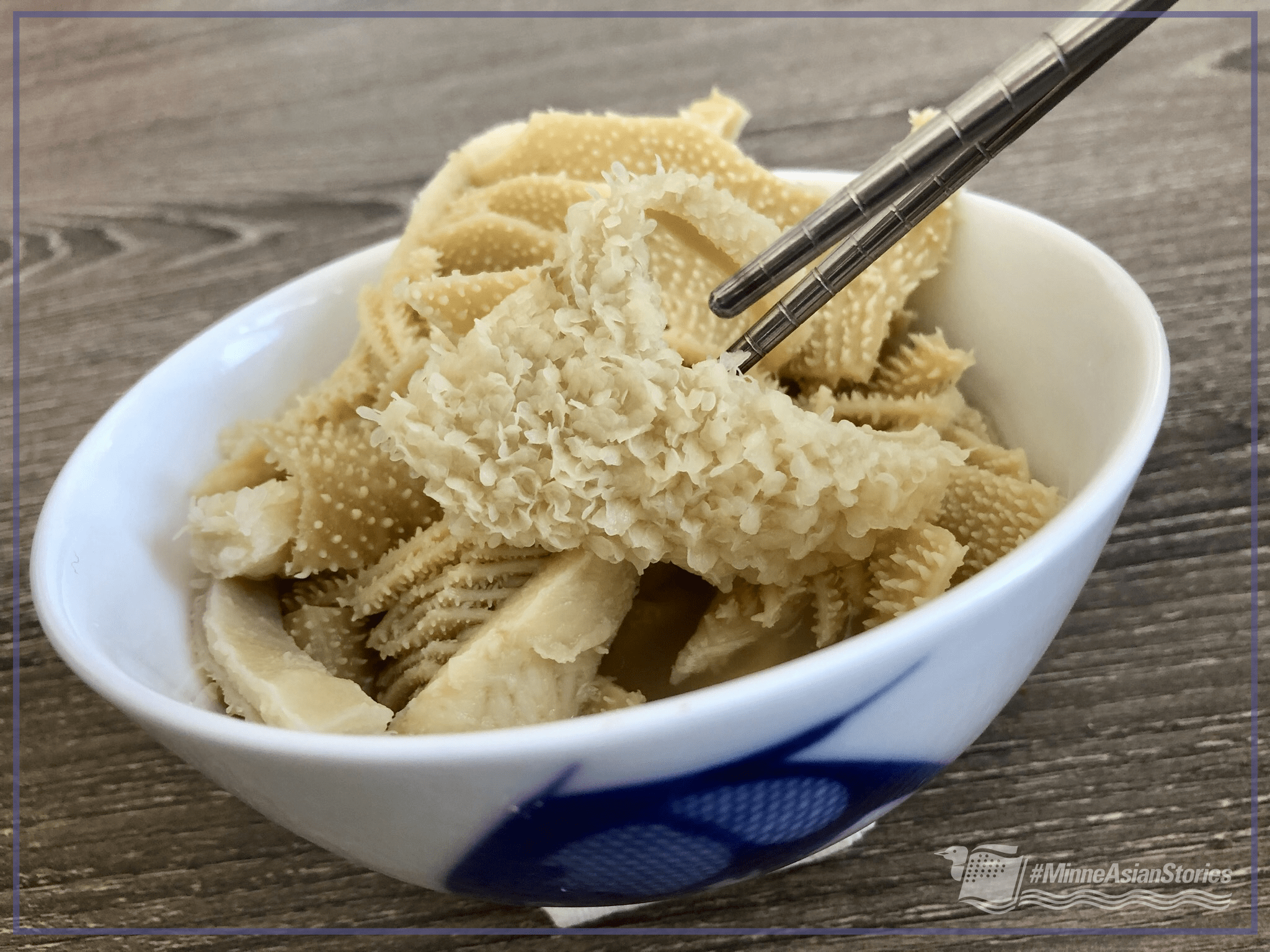
“Cow stomach,” my mother said. “If you like Hmong girl, you have to eat it.”
I looked on but other family members acted like they were watching TV. Their bodies were positioned elsewhere but I knew their ears were all tuned into the show that was unfolding in the kitchen. Darrell stared at the bowl of steaming tripe. The pungent dish saturated the house.

Darrell responded nervously, “It looks different, a little grayish.”

I explained to him it looked different because it wasn’t the bleached honeycomb tripe he was used to seeing at Chinese dim sum. My mother’s tripe was harvested from a cow we had killed at the local slaughterhouse. I saw how her skilled hands clutched a small knife which masterfully danced with the tripe as she swiftly cleaned and cut it.

Her tripe dish was seasoned with only a dash of salt to ensure the natural odor and flavor lingered. Tripe is a delicacy. At Hmong parties, you can hear the elderly instructing those preparing the tripe not to clean it too well. Some believe tripe is best when there is a pronounced scent.

My mother anxiously waited for Darrell to start eating. Annoyed, she said, “If you don’t like Hmong girl you don’t have to eat it.”

Darrell let out a nervous laugh. A bowl of rice was next to the bowl of tripe. He scooped rice onto his plate. Then, he slowly spooned a few pieces of tripe on his plate. Finally, he combined a lot of rice with a little tripe and as casually as possible, lifted the spoon into his mouth. He chewed. He swallowed.

“It’s good,” he said with an unconvincing smile.

My mother laughed. “Yes, it is very good,” she said.

And just like that, Darrell pried his way into my mother’s heart and began to make room for himself in the Hmong community. If you like a Hmong girl, having an open heart and open palate goes a long way. A year after Darrell passed that test we were married in Hmong, Chinese and “American” ceremonies.

Our children are Chinese, Japanese and Hmong-American. They have grown up with Hmong Hu Pligs (spirit calling ceremonies), Chinese red egg parties, Japanese Obon Festivals and endless baseball games.
Asian Minnesotans may look alike, but we come from unique cultures and have rich stories. I wish our neighbors could see and appreciate how blessed Minnesotans are to have such a diverse, vibrant, and thriving Asian-American community.

Check out the rest of #MinneAsianStories.

Family of 10


By Yu Jie Chen

About 36 years ago, I immigrated to Minnesota with my mom, two aunts, and 10 other children who were my siblings and cousins, ranging in age from several months old to 11 years old.

One day, in a peaceful village in Kinglam, Onfen, Guangdong, China where about 200 people call it home, I was told to get into a minivan. All of the kids and moms got in the vehicle and off we left the village where everyone knew everybody’s name and everybody is very much alike. On the way to America, we stayed temporarily with friends and relatives in Guangzhou and Hong Kong.

When we arrived in the cold Minnesota, at the age of nine I met my grandpa for the first time. None of us knew any English. We brought with us what we could carry in a few suitcases, with little money. We came to a place where we did not know the people, the food, the environment, and the culture. The kids reunited with their fathers and the wives with their husbands who had arrived in Minnesota six months earlier. My grandfather who immigrated to Minnesota in 1973 found work for his three sons.

My family and my uncle’s family rented this very old house in Minneapolis. Each family had one bedroom and we shared a small kitchen that fit a table and some chairs. Eleven people crowded into this kitchen to eat. Two families shared one car.

A couple of years later, the two families purchased a house together and our grandparents also lived with us. Our grandparents lived on the third level, my family lived on the second level and my uncle’s family lived on the main level. Each family had two bedrooms, a living room, a bathroom, and a small kitchen. My parents kept on telling us kids that we need to learn English and do well in school. And I did. I stayed up late many nights to study and graduated with honors in South West High School, Minneapolis. I was on the Student Council and on the National Honor Society. My parents and grandparents never had the opportunity to attend high school or higher level education in rural Guangdong, China. My parents wanted their kids to have the opportunity to go to college. And we did. I was the first in my family to graduate with a college degree.

My parents worked very long hours working at Chinese restaurants. I started my full-time summer job at the age of 14 at a Housing Resource Center in Minneapolis as an office assistant. I took two buses to go to work. Then I worked part-time at a Chinese take-out restaurant in Minneapolis where my mom was a chef and again I took two buses to work. In the evening when the restaurant closed, my mom and I walked 6 blocks in the dark to where my dad worked as a chef so we could get a ride home. Sometimes when my dad had to work near midnight to clean the kitchen hood, my mom and I took two buses home to Uptown, Minneapolis.

Eight years later after our arrival to Minnesota, my family was very excited to purchase a Chinese restaurant in Shakopee. My father went from being a bookkeeper and mom, a farmer in China to chefs in the United States and then restaurant business owners. That was their dream. My parents later sold their successful restaurant business to my older sister and retired. I went from working in various companies holding administrative, supervisor, and management positions to stay-at-home mom to career real estate professional. I am happily married, have two great kids, live in a comfortable house, and have a career that kept me up at night. So we did alright.

Check out the rest of #MinneAsianStories.