The Ahnung Way

The Ahnung Way
By Marilou Chanrasmi, Bloomington

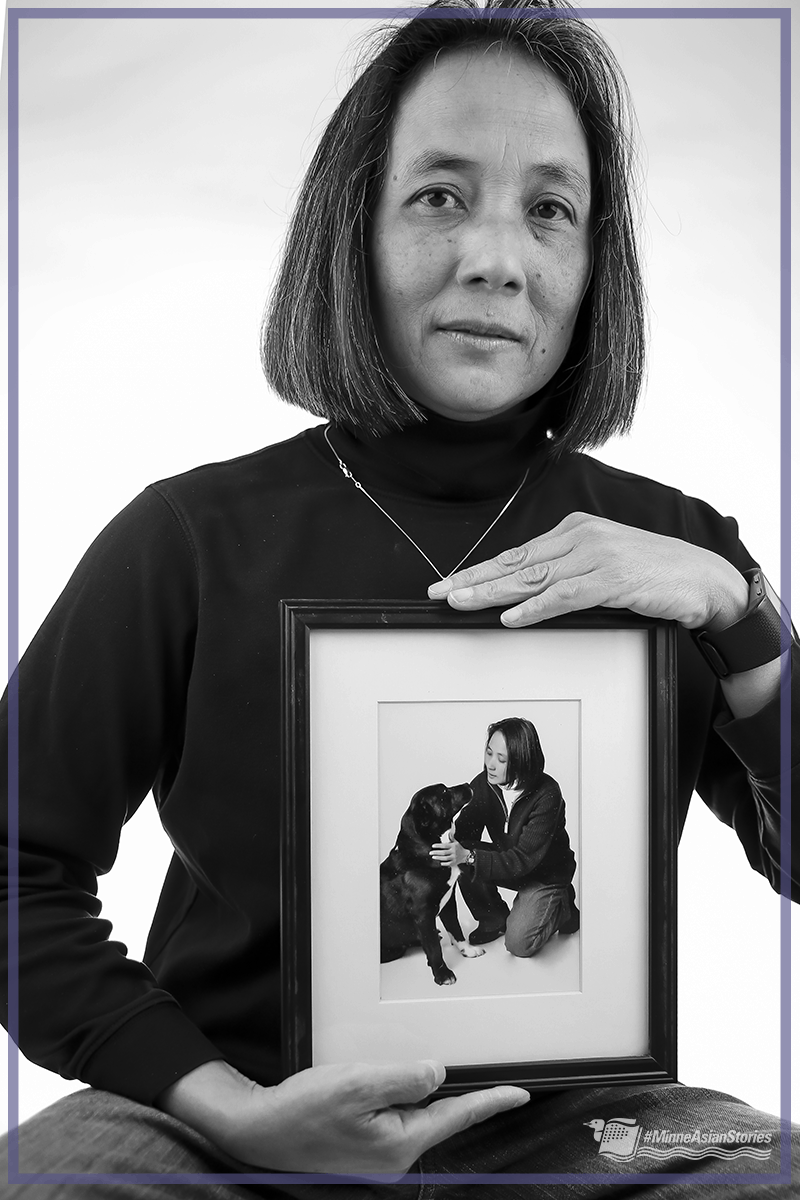
It’s Spring, 2009. I am standing in front of a classroom of 9th graders, comprised of at-risk youth at a school in St. Paul. Next to me is my dog Ahnung. I share with the students how my journey led me here; how grief, pain, and not feeling like I belonged led me to volunteering to help abandoned, neglected animals find homes.

I met Ahnung in October 2008 at Red Lake reservation in northern Minnesota. She was nursing her 8 puppies; her nipples were full and almost touching the ground. She looked worn down and haggard. A solid black dog with unique white markings: one white front paw, patches of white on her face, a white chest and a curly black tail with a white tip.

She gazed at me. She had pellets in her body; she had no front teeth from grinding it down in search of food. Ahnung’s early year were hard and full of struggles. Her body held scars of her past.

“What does Ahnung mean?”, asks one of the kids. “Star”, I respond. “It means star in Ojibwe, the language of the Red Lake Band of Chippewa Indians. I wanted a name representing her roots and because she has been my north star guiding me through a very dark period in my life.”

As I look out at a room of kids intent on hearing my story and Ahnung’s story, I realize that the light shining from Ahnung’s star is so much brighter than I even imagined. These kids are deemed “at-risk”. These kids, like Ahnung, have been tossed aside. My eyes scan the room. Ahnung walks up to a young kid who has been staring blankly out the window. She lays down next to him. Minutes later, the kid’s hand begins gently stroking Ahnung’s back. No words. Ahnung lays still like a service dog, as if she knows, this is exactly what the boy needs.

Wounded spirits. Like the young kid, I too was a wounded spirit.

I arrived in the U.S. when I was 16 from Thailand. The complexities and trauma I buried deep inside of me began to unravel when I arrived in a foreign country where I stood out. I was a brown skin. I began to apologize for being brown. I chose assimilation to a white culture in order to survive.

As a child I was hurt so deeply by humans. I learned not to trust humans. It took a being with four paws, Ahnung, to open my heart and teach me how to trust again. Ahnung was doing just that for these kids deemed ‘at risk’.

The young boy keeps stroking Ahnung, then softly says, “Man … this dog is loved. This dog is really loved.” I see an aliveness emerge from the young boy.

His teachers asks me after class, how did your dog know?

I smile.

“She just knows.”

Ahnung (now from the spirit world) continues to guide me in finding my way back home to my roots.

Check out the rest of #MinneAsianStories.
Child of Refugee Desires


By Magnolia Yang Sao Yia, Saint Paul

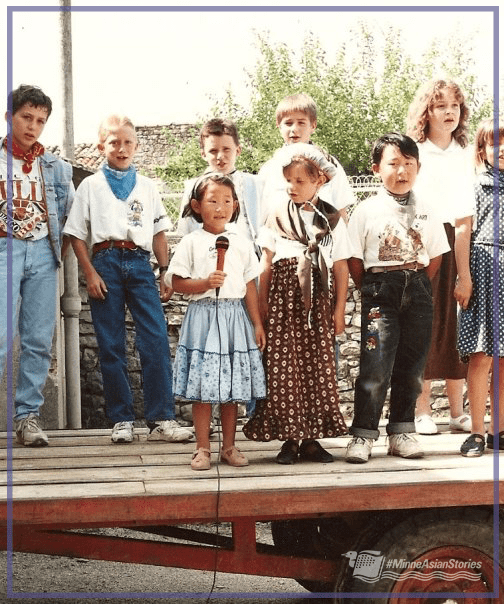
I am a child of refugees.

I am a child in constant refuge. I am always running away. Running away from refuge. Running to refuge. Undocumented criminalized, valorized like I need your validity, applauded for getting through the hard times “OMG that must have been so difficult.” Don’t pity me, just listen to me. Tokenized for being colonized with all my fancy Meeka words untranslatable to my community or even to my own father and tais tais not able to say “hi how are you” in Hmong and “I miss you so”, so here I am, trying to find myself but running away because that is what I do best, that is what we do best. Refuge.

Become the refugee from war, the war inside my home, the war inside my heart and mind, the war that has never left and is always present, in-tension, the war in which whiteness sustains in my everyday life and am reminded that I am a person of color maybe not because of my color but because of my chinky eyes. “Do you even see from them,” “Look at these pretty blue eye contacts, don’t they make me look beautiful,” and “How is it that you have no eyelids” they say, as if I am alien, foreign, always a foreigner in this land, I am reminded, not because of my color but look at my eyes as if I’m unable to look back because I have a different set of eyes. These eyes can see right through you, I promise, in the same way you have penetrated my soul, these eyes also penetrate your truth. I see your truth, for you see, your truth is always dependent upon my truths, because you steal from me, you erase me, you steal from and erase my ancestors. My ancestors speaking through my body, the vibration is felt through the Earth and resonates in my heart. They know what you did. They know what you do. They haunt me and remind me every day the things you do in how you creep up wanting to save me, to save us, to take from us. Lies entrenched in your own desires to desire more than you can ever desire in a place where desire is limitless for you, and not a reality for me. What is to desire? Why can’t you share – ever?

Home. I desire home.

Where is home? What is home?

It seems we will never arrive home.

Check out the rest of #MinneAsianStories.

Snow in April and Halmoni’s Cooking


By Lauren Scott, Saint Paul

It’s not just the color of my hair that makes me Korean or the ethnic food I love to eat that makes me Korean. It’s the traditions, the big get-togethers, the love. I remember when I was in preschool I loved, (and still do) the fun times I got to spend with my Korean grandparents. Growing up today as a biracial Korean American I know is very different from when my mom was a child. It is because of all of the powerful leaders in our local community and in the United States that make it easy to be proud. To me what it means to be Korean-Luxembourg-French-English in the state of Minnesota is to build a snowman in April and come in to eat some good Korean food. But really, I think it means you are a strong, smart, loving individual like everyone else whether you live in Los Angeles or New York.

Check out the rest of #MinneAsianStories.
Minnesota is my home now


By Kamala Puram, Edina

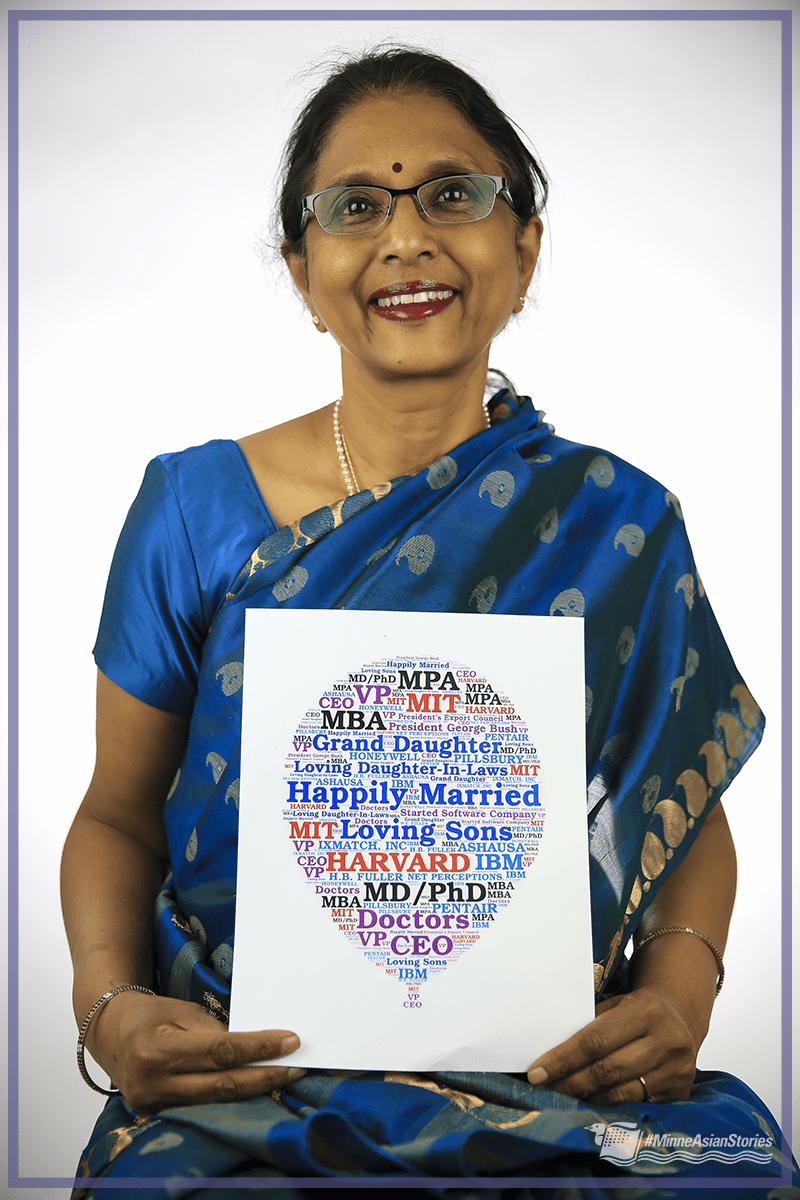
I came to Minneapolis as a young bride on June 30, 1980 from Hyderabad, India full of hope and aspirations to be successful. We came with very little money and the belief that I can accomplish anything if I work hard and stayed focused.

Fortunately for us, we were able to achieve the American dream and had very successful careers. We raised two loving boys who had the opportunity to get their undergraduate degree from MIT and their MD/PhD from Harvard.

Even though initially I was reluctant to move to USA, I was happy that we made the right choice. America is truly a melting pot with so many opportunities to fulfill one’s dreams. I am glad that we moved to the Midwest instead of the East Coast or West Coast. It was perfect for us. People here in the Midwest are really friendly and nice. They were really welcoming and made us feel at home.

When we came to Minnesota in 1980, there were only 5,000 Asian Indians compared to over 50,000 Asian Indians living here now. We had to get used to cooking Indian food with what was available and we would also make trips to Chicago to buy Indian spices and groceries. I used to miss authentic Indian food, and wanted to try Mexican food since we were told that it is as spicy as Indian food. However, I did not like it at all. Over a period of time, we did get used to different types of food and now we really enjoy Mexican and Italian food.

My immersion to American culture was through television. I used to watch CBS News by Walter Cronkite regularly so that I could get used to the accent. I watched soap operas and would turn on the television at a set time to find out how the drama would unfold. This was addictive.

When I came in June, the local Minnesotans would talk to me about the Fall colors and how cold it will get during winter. I used to brush it off as I had not seen the Fall colors nor did I ever experience extreme cold before. Come October, when the leaves started changing colors, it was so mesmerizing. I would just stand on the street and admire the Fall colors. I could not get enough of it. Winter was not as thrilling as Fall. I had to get the right shoes, gloves, and a winter coat as I started going to school. I had to learn to walk carefully, slightly bending forward and taking baby steps so that I would not fall. Even though I did not like the cold, I did enjoy the snow. It was so pretty and beautiful.

Minnesota has become our home now and feel fortunate that we have many friends who were born and brought up in Minnesota. They have always been with us and guided us as we assimilated into this country.

Check out the rest of #MinneAsianStories.
50/50 My Life in Minnesota


By Jonas Lim, New Brighton

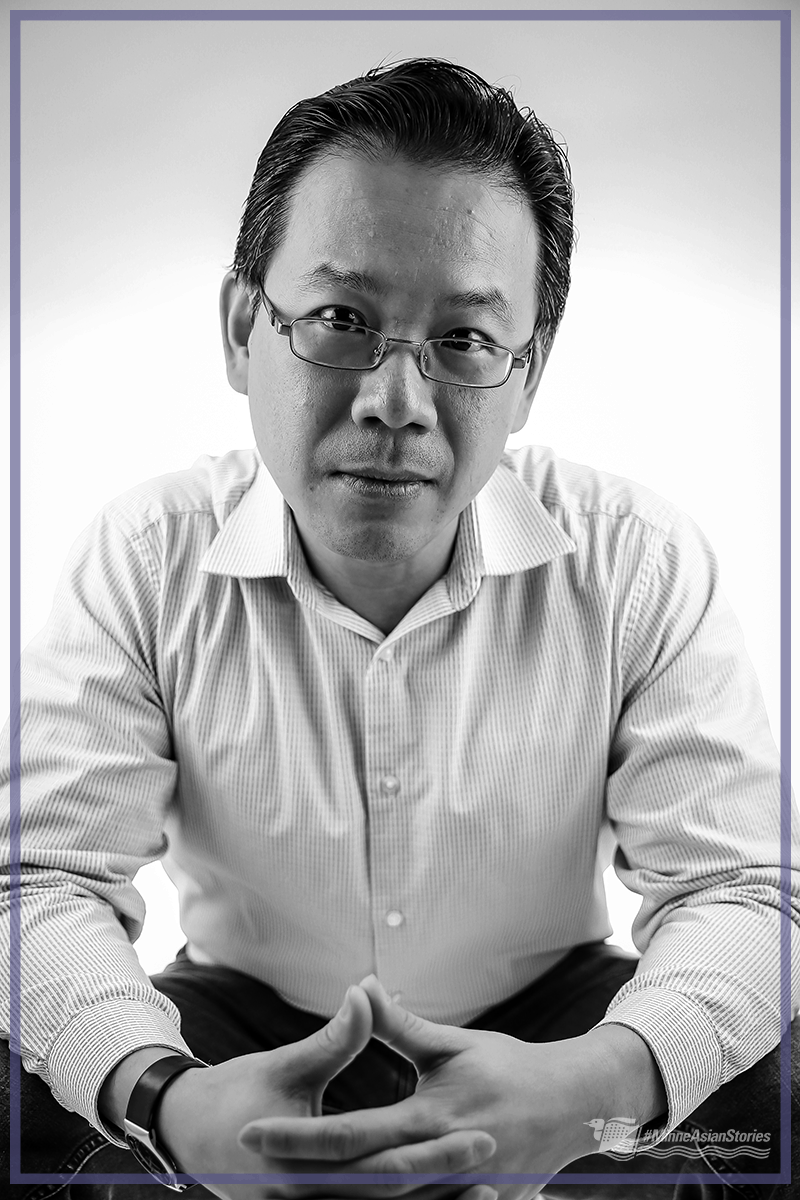
I came to Minnesota from Singapore when I was 23 for an undergraduate degree at the University of Minnesota. I thought I would be here for only 4 years. After 22 years and half of my life here, Minnesota is now my adopted home. I will always remember my first winter here, the winter of 1996, which was also one of the coldest in state history at -22°F on Christmas Day.

Even today I still get questions about why I moved from a warm country like Singapore to Minnesota. My reply has always been that I wanted to experience the winter but forgot to check the temperature. Now, I am acclimated to the weather here but I still wish for a shorter winter.

Other than the weather, as an immigrant, there is a lot to learn and get adjusted to. I had to overcome people making fun of me because of my accent in my earlier years. Over time, I learned to speak up more like an American rather than the way we were taught in Asia.

In addition, culturally, one from Asia needs to overcome the many dilemmas of living in America. Some of these include being more individualistic rather than communal, being more outspoken rather than quiet as a sign of respect, being more ambitious rather than down-to-earth, etc. All these were things that a university degree did not prepare me for but I learned through the years while being part of Minnesota’s fabric of life.

I also think “Minnesota Nice” helps one get adjusted faster because Minnesotan are more patient and willing to share here. The Minnesotans I met were curious about where I was from and were willing to listen to my story. I was at Duluth for Easter weekend with my family and had a chance to reflect on my life here in Minnesota. There were tribulations and challenges of learning how to live in a new country, but more importantly, it has also given me a home and a lovely family. I believe I earned and learned my way to be a Minnesotan, and hopefully one that embodies the best of East and West.

Check out the rest of #MinneAsianStories.
A Viet Woman’s March


By Jennifer Nguyen Moore, Saint Paul

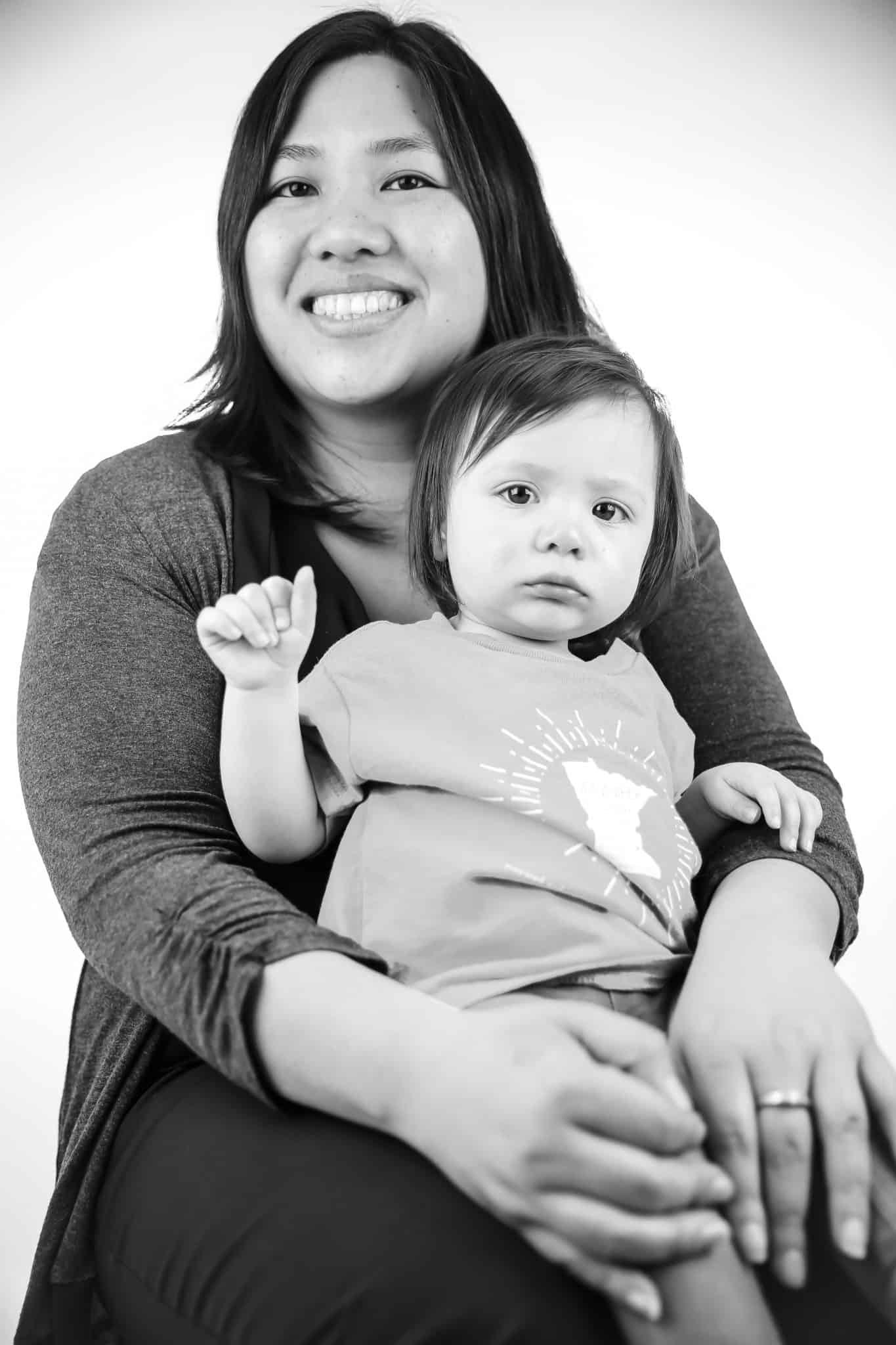
As a daughter of Vietnamese refugees, I experienced challenges fitting into our new country, even though my father fought alongside American soldiers. My parents knew the value of connection and community. They still made time to help people with citizenship test, applying for jobs, preparing individuals for their job by providing clothes and driving them to work and interpreting for the Vietnamese community.

Even though we didn’t have financial wealth, we knew to pay attention to a different kind of wealth, the gifts that people have inside of them. We sought support from Ramsey County to stay afloat.

As a child, I remember drinking powdered milk and making meals from the “government (block) cheese.” I remember how difficult it was for my mother who spoke limited English to navigate the County application process. This year in 2018, I announced my candidacy for Ramsey County Commissioner in District 3. As an environmental justice advocate, I bring the lens needed to identify and address racial disparities to ensure we live healthy lives.

As a new mother and a professional working full-time, I bring forth the perspective needed to ensure young families are flourishing. When elected, I would be the first Vietnamese person elected in office in Minnesota and the first Asian Ramsey County Commissioner. The Vietnamese community settled in Minnesota for over forty years and the Asian community is a large population within Ramsey County, yet we haven’t had representation. Becoming the first Vietnamese elected official would come with many challenges but it will open even more opportunities.

Most importantly, I would reflect our community and my daughter will see her possibilities.

Check out the rest of #MinneAsianStories.
Prophecy is After Me


By Jay Colond, Falcon Heights

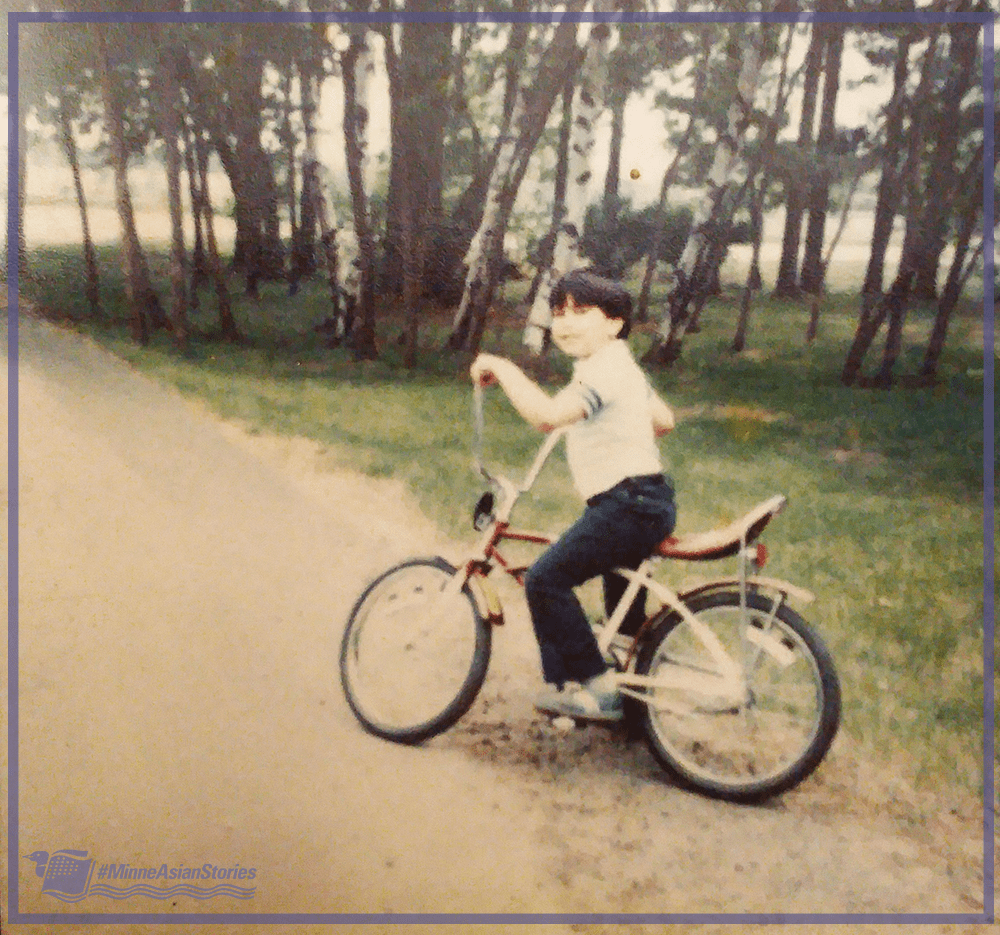
I’m sharing a photo of me in my Sears Toughskins (husky) jeans on my very first bike, a banana-seat, coaster-brake, ape-hanger, 70s-brown (like me) Huffy. Swa-ag.

By 1979, my family and I had been in the United States for five years and we were looking for the best secondary migration destination. Like a lot of other recently arrived families before us, my parents were looking for stable income, and having blended a family from two Asian cultures, they didn’t feel particularly at home in any mono-ethnic community. Having first landed in San Francisco, we briefly tried Arizona, Chicago, and Minneapolis before settling in the East-central Minnesota town of Cambridge, along the banks of the Rum River, where my parents found stable jobs working at the now long-closed State Hospital.

I am an only child and was one of a bare handful of colorful faces in our tiny town. As a very young immigrant, I wasn’t aware of rootlessness or alienation; and as an only child I took a solitary existence for granted. My parents were fitting into Minnesota their own way and made the warmest home they could, innocently keeping and discarding their habits, languages, and memories of bigger cities, warmer places, and “exotic” tastes and smells.

I remember clearly being so excited to fit with my bicycle-riding second grade peers. One of a thousand acts of artless assimilation, having and riding my own bike was a way to fit into one of the slots I saw laid out for me. I practiced for hours in the parking lot behind our building, riding in endless self-soothing circles.

An early eco-horror movie, the mildly expropriative flop, Prophecy, had just come out. My nerdy young mind must have gulped in one of the gory ads showing a monster attacking campers. While pedaling around and around, I rhythmically chanted a nonsense rhyme, “Prophecy is after me,” imagining the huge mutant bear looming out of the thin birch trees that ringed the parking lot.

That solitary, almost meditative, sense of conjured dread can still drive me into a fugue. Sometimes when I’m piecing together the jigsaw of brown memories, dominant Minnesotan expectations, and trying to connect the gaps between what people say and what they want, I’ll catch myself drifting off into space. I’m still soothed by holding that half-understood, unfinished dread, something at least can concoct or control, soothed, by spinning my wheels, while I try to understand why I don’t understand what Minnesota wants or sees although everyone seems to think I should understand. Even though I’m old enough to know better.

Check out the rest of #MinneAsianStories.
From the Burmese Jungle to the Promised Land


By George Thawmoo, Saint Paul

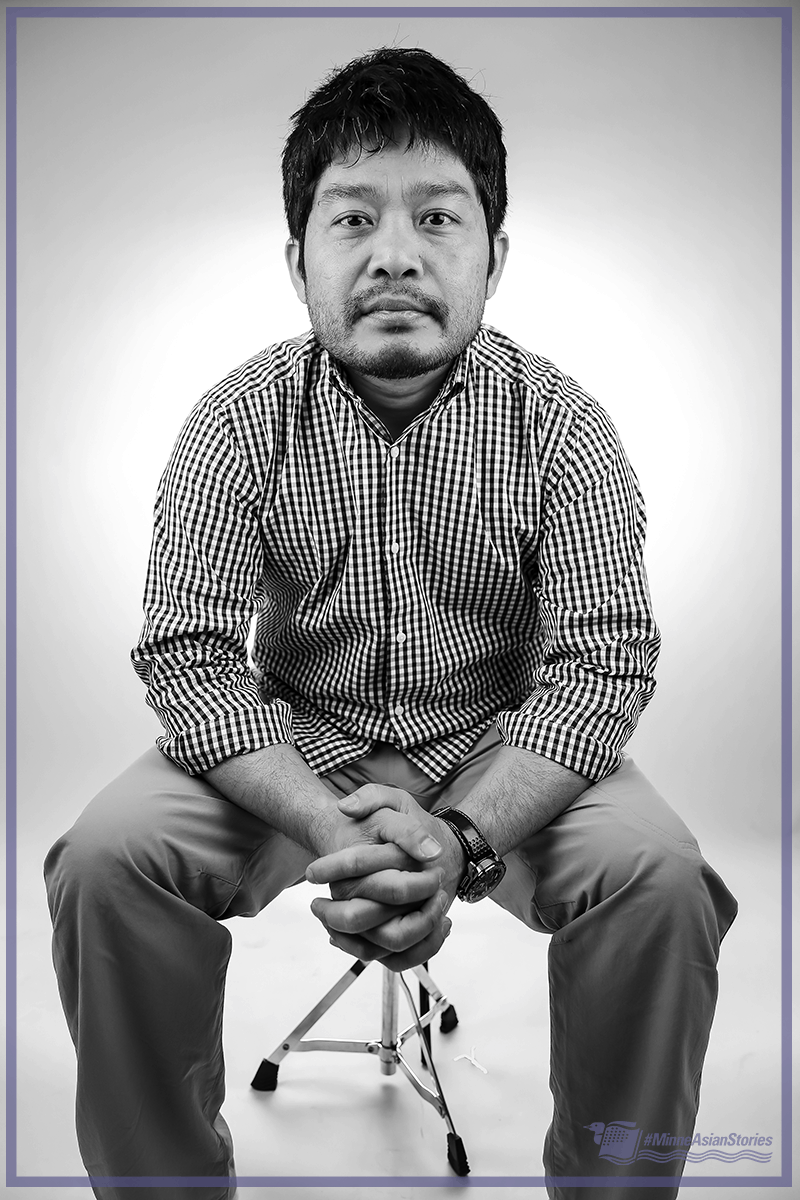
I was born and raised in the jungle in Burma. I wasn’t a recognized citizen of Burma. I was an outcast. I belong to the Karen “resistance group.” When you belong to a minority group in Burma, life is pretty much predetermined. Your fate is sealed. It means you will be persecuted at every opportunity. The Karen are fighting for justice and equality. But the Burmese are seeking to defeat, destroy and dominate. We were outnumbered and outmaneuvered. Our bases were overrun. We had no choice but to leave and we all became refugees. It was 1997.

Life as a refugee was dehumanizing. You ate what you were given. You lived like you were told, behind the visible and invisible fences. It was humiliating. You have no freedom. You were harassed by the Thai security personnel on a daily basis. They destroyed our women. There was no dignity. We were the unwanted with nowhere else to go. In the refugee camp, you are subhuman. You lived at the mercy of others.

After years in Thailand, we finally saw a ray of light. The U.S. government and its people opened up their arms to allow us to resettle. Life with dignity. We’ll be able to dream the American Dream like others. They say you can be whoever you want to be if you work hard. Those words empowered me, energized my spirit. I seized the opportunity and never let go. I was optimistic. Now, I will be someone that I was never before.

It’s been eight years since I first set foot in the US. Life wasn’t easy. I knew exactly what I was getting myself into. Reality set in. Now the American dream seems too lofty to reach. I didn’t know then the existence of the invisible rules, the economic ladder. I didn’t know the history of slavery, the Civil Rights movement, Rosa Parks, and Jim Crow Laws. I didn’t know that Black, White, Brown and the in between are created unequal. No one has told me about Roe v. Wade. No one had told me about mass shootings and how vulnerable our children are in school. No one told me about Brown v. Board of Education and the achievement gap. No one told me about covert and overt racism. No one told me about Japanese Internment Camps and the Chinese Exclusion Act. No one told me that this land once belonged to the Natives. I didn’t know about the Trail of Tears and Reservations. Who could have believed that this great nation had only one Black president? Who could believe that this great nation never had a female president while countries like Burma, Pakistan, Thailand and the Philippines all had? I thought America is cultural melting pot where everyone coexists in peace and where everyone dreams the American dream undisturbed.

It feels like Déjà vu all over again. There is no such thing as the “perfect” place. However, I am grateful for the new life that I have been given from the American people. I’m now a new American, a free man and I must do to the best of my ability to contribute to this society.

Check out the rest of #MinneAsianStories.
Seeking Roots

By Geet Mittal, Minneapolis

Immigrating to a new country isn’t easy. We are all connected to the roots of countries, nations, and places, where we have spent the impressionable days of our lives. And getting married in a pardes (foreign country) as my parents put it, didn’t exactly win instant approval. Yet, here I am! In pardes, part of a wonderful family, which since my arrival, has added two beautiful, loving children.

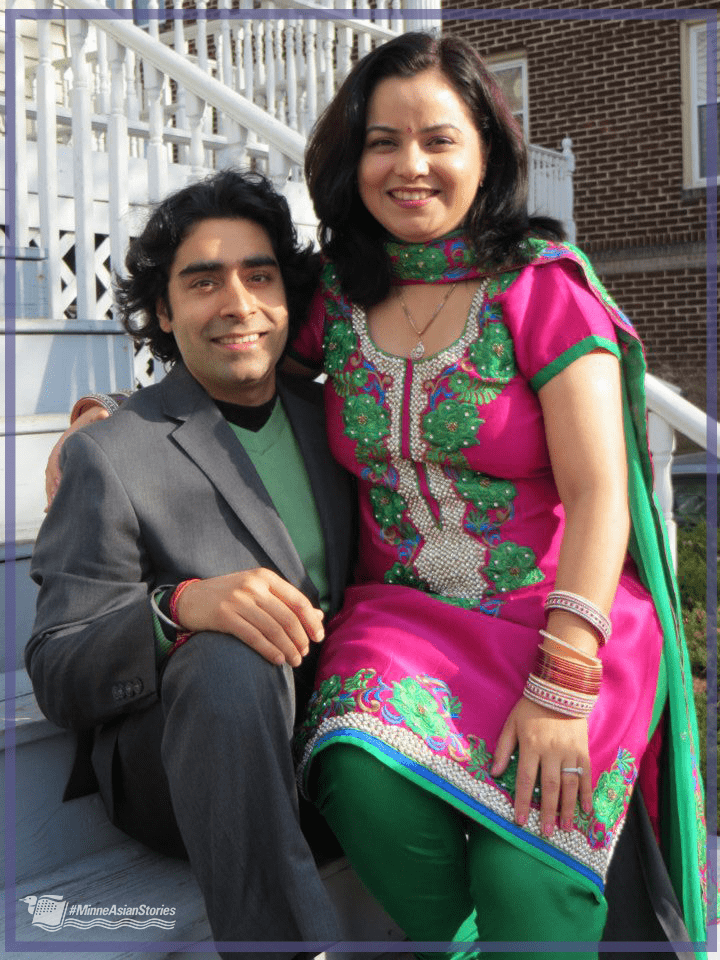
Minnesota, the North Star state, with winters that are cold beyond reason, welcomed me five years ago, on a sun-chilled day in November. Ten days later, I was in downtown Minneapolis, getting married in a civil ceremony. That evening, wearing my traditional Indian dress (lots of sequins!), my husband and I went to Trader Joe’s on Excelsior Blvd. The lady at the checkout counter praised my dress and I told her it was our wedding day. She asked us to wait and came back a couple of minutes later with a beautiful bouquet! I was so touched by this expression of happiness in our union. It is the best memory of my first two weeks in Minneapolis.

I’ve been here for five years now, yet I feel like an outsider. Most of the time, it’s the way I am being seen. Without asking me my nationality or race, most greet me with an “Hola!” It’s not that I’m offended at being called Hispanic. I’m simply disappointed no one bothers to ask. They don’t know better, yet they carry on with their assumptions. I see it as lacking respect for the differences we have. It took me a while to figure out how to respond so it is less upsetting to me. Now, I just say “Namaste” and move on.

Another struggle I have is when people ask, “You are from India, so how do you speak such good English?” Frankly, it angers me and I try to rectify such views by explaining India is not just what movies like Slumdog Millionaire present it to be. It is more than that. Much more. It is a nation that has seen the end of civilization when others were not even born. A nation that thwarted countless invaders, fought back, yet has accepted and created new cultures and languages from these attacks. It is a rich amalgamation of religions, languages, cultures, and philosophies.

As an immigrant, I need to accept both worlds. The world of my past has made me what I am and my present world is molding me into a new person with its distinct experiences. I love both and I respect both. As human beings, we are all trying to find our roots in one way or the other, immigrants more so. Metaphorically and in reality. People like me find a way to grow, all we need is the faith that they lie within!

Check out the rest of #MinneAsianStories.
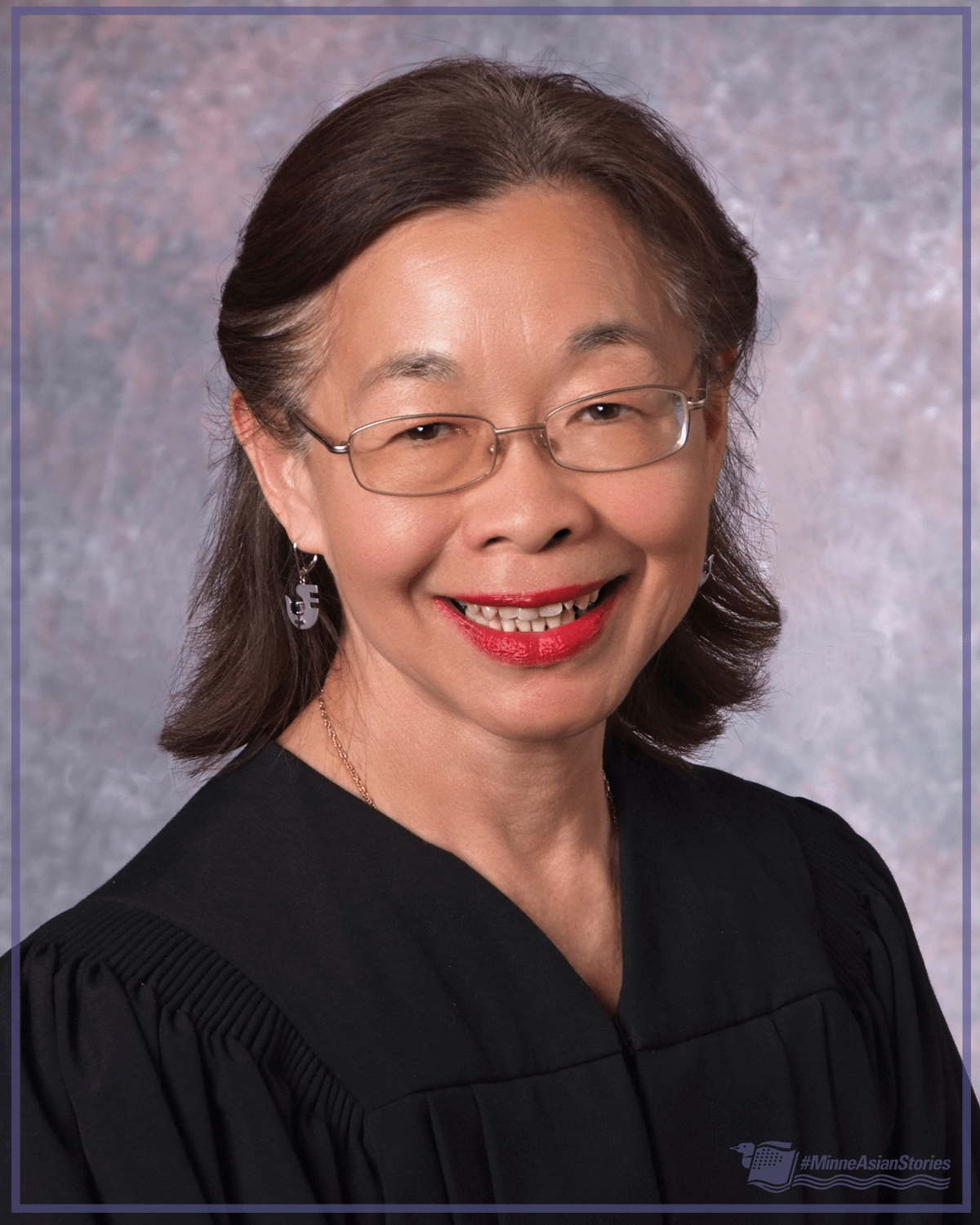
From Jamaica to Judgeship: Dreaming Big


By Gail Chang Bohr, Saint Paul

I was born in Jamaica, the ninth of 15 children in a Chinese immigrant family. My mother was born in Jamaica; her family came from China as did my father as a teenager. My parents started with nothing but through their hard work and determination, they opened Jamaica’s first self-service supermarket, Chang’s Emporium.

I learned from them to take risks, to work hard, and to have faith in myself. My childhood in Jamaica prepared me well for my later education and career as a social worker, lawyer, executive director, and judge in the United States.

I left Jamaica at 18 to attend Wellesley College where I had been awarded a full scholarship. After graduating with a B.A. degree, I earned a graduate degree in social work and had a 19+ year successful career as a clinical social worker in Boston, Hong Kong, Sacramento, and St. Paul.

For most of my social work career, I worked with children and families in medical settings and was the lead Pediatric social worker at the teaching hospital of UC Davis, Sacramento. In Minnesota, I was a senior social worker at Children’s Home Society.

At the age of 43, with the loving support of my husband and two children, ages 5 and 10, I decided to go to law school to enhance my advocacy for children. I graduated magna cum laude from William Mitchell College of Law, clerked for the Chief Justice of the Minnesota Supreme Court, and was an associate at Faegre and Benson. In 1995, I became the first executive director of Children’s Law Center of Minnesota (CLC).

I thank my parents for teaching me to put the children first. Their admonition, “who is taking care of the children” was never far from our minds at CLC. We used the law to advance the rights of children. By the time I left in 2008, I had recruited and trained over 270 pro bono lawyers to represent children in foster care; helped to ensure, through legislation, that siblings were placed together for foster care and adoption; that foster youth had independent living skills before they turned 18 years old; and could keep more of their earnings if they worked to save for college and were still in care, among other systemic reforms.

Yet, my immigrant dream was not over. I had always wanted to be a judge ever since I clerked at the court. My applications for appointment were rejected so many times I finally resorted to self-help. When the opportunity of an open judicial seat occurred, I took the risk to run for election, campaigned hard, and achieved my dream of being a judge. I won the election by 52 per cent.

In doing so, I became the first Asian Pacific American judge in Ramsey County, home to the largest APA population in Minnesota. Upon retiring in 2014, I was pleased to continue to serve as a senior judge, to be an international consultant for the National Center for State Courts and train judges in Trinidad and Tobago and Jamaica. As my parents in Jamaica did, I hope I broadened the landscape of opportunity for Minnesota’s Asian Pacific American community.

Check out the rest of #MinneAsianStories.